
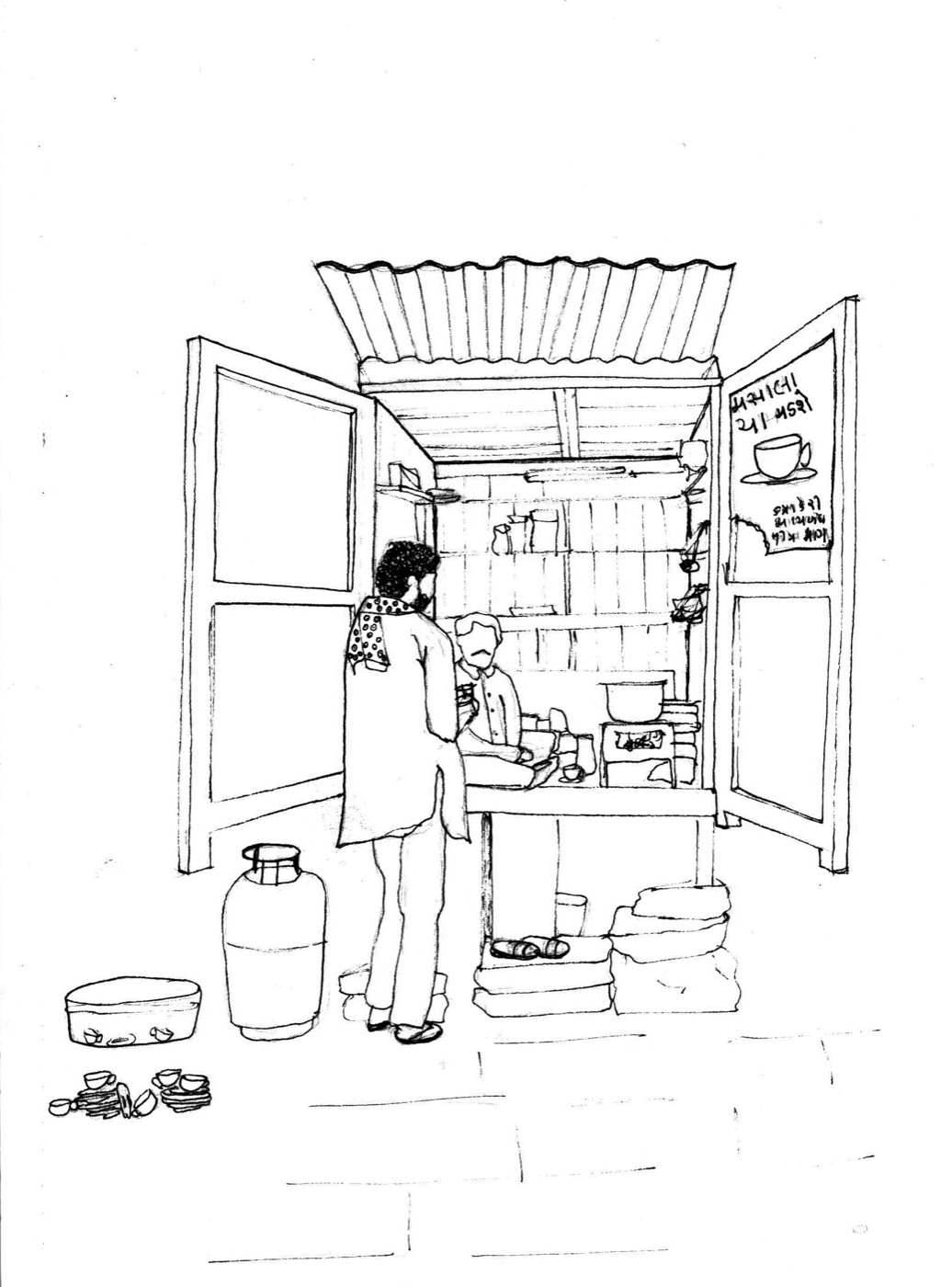
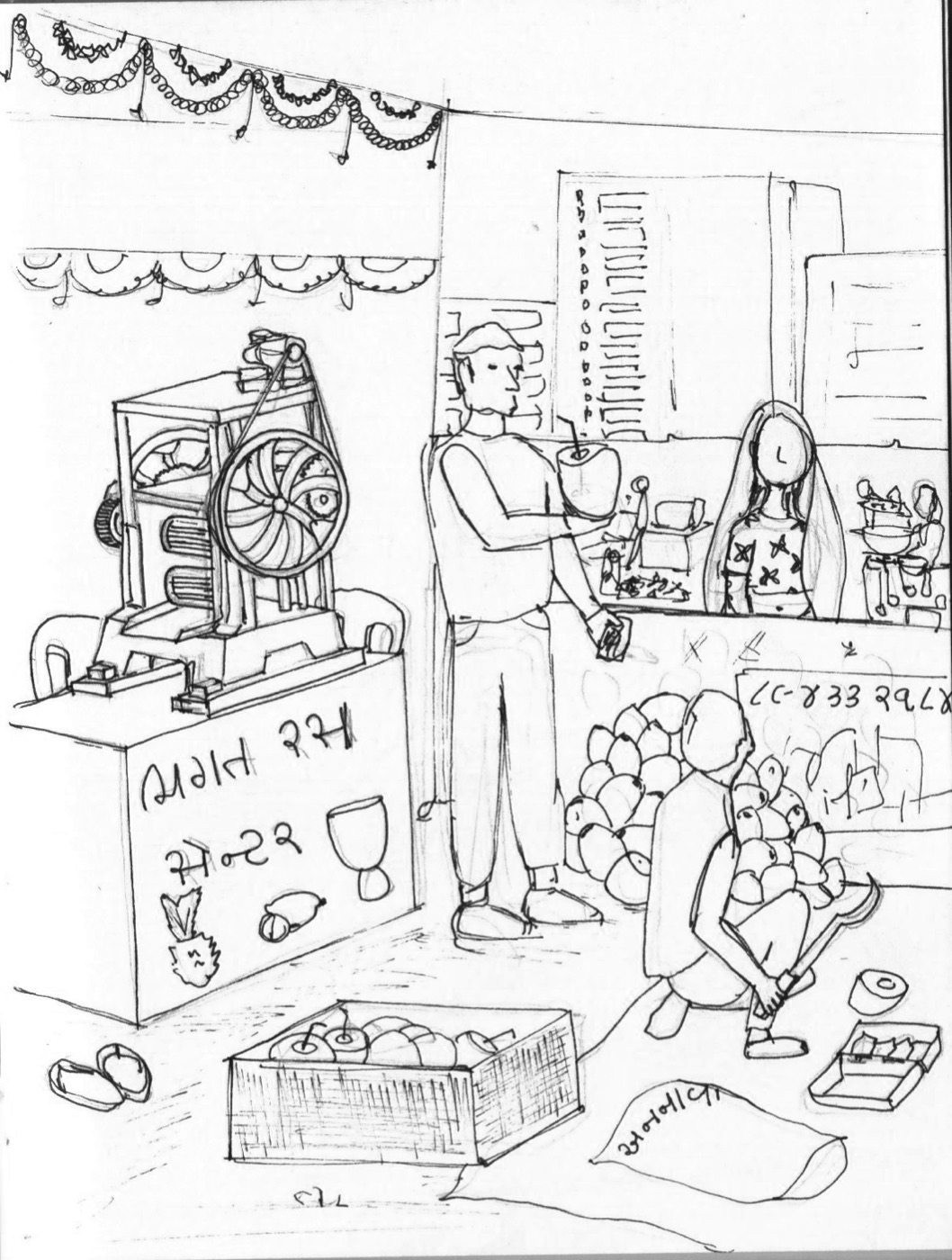
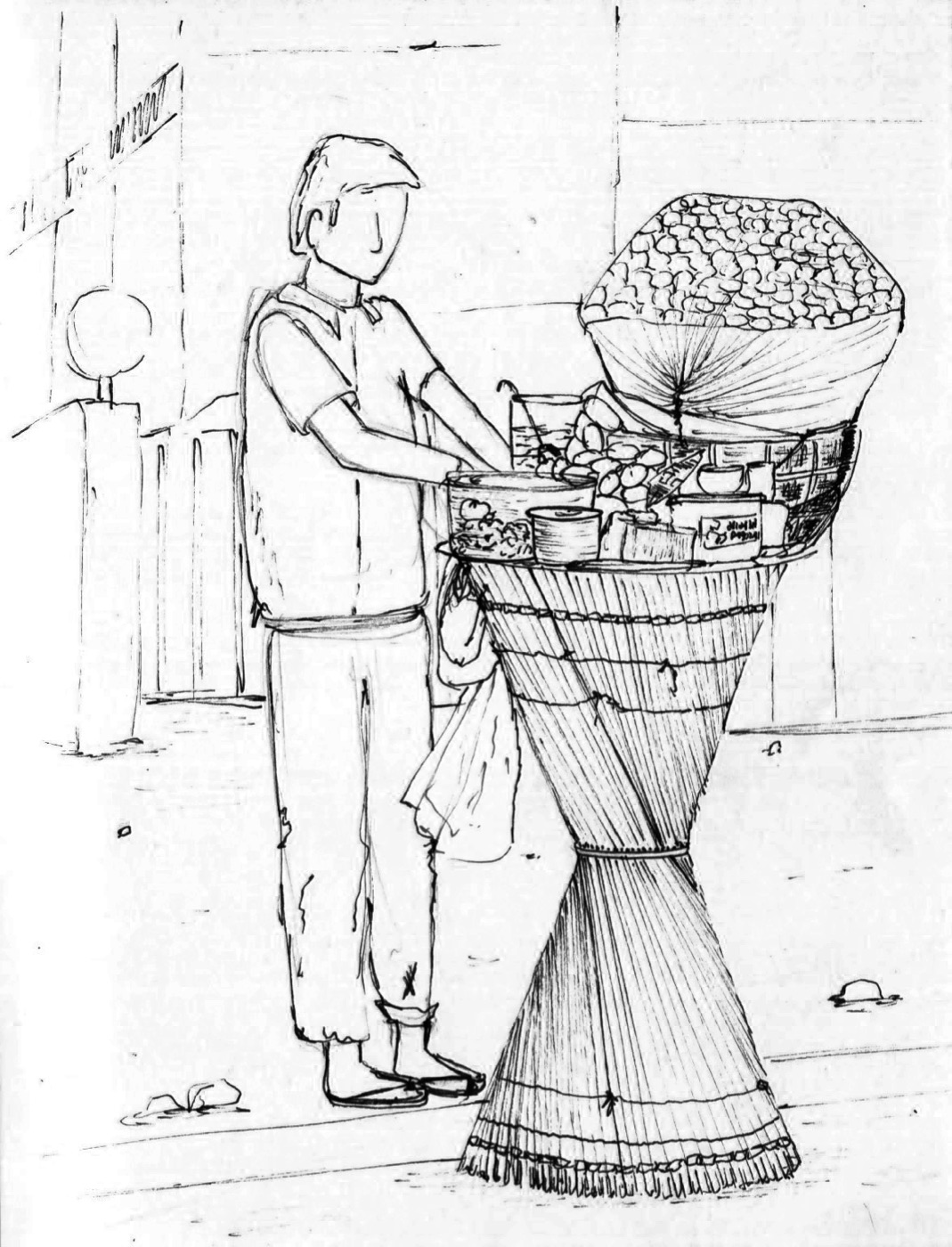
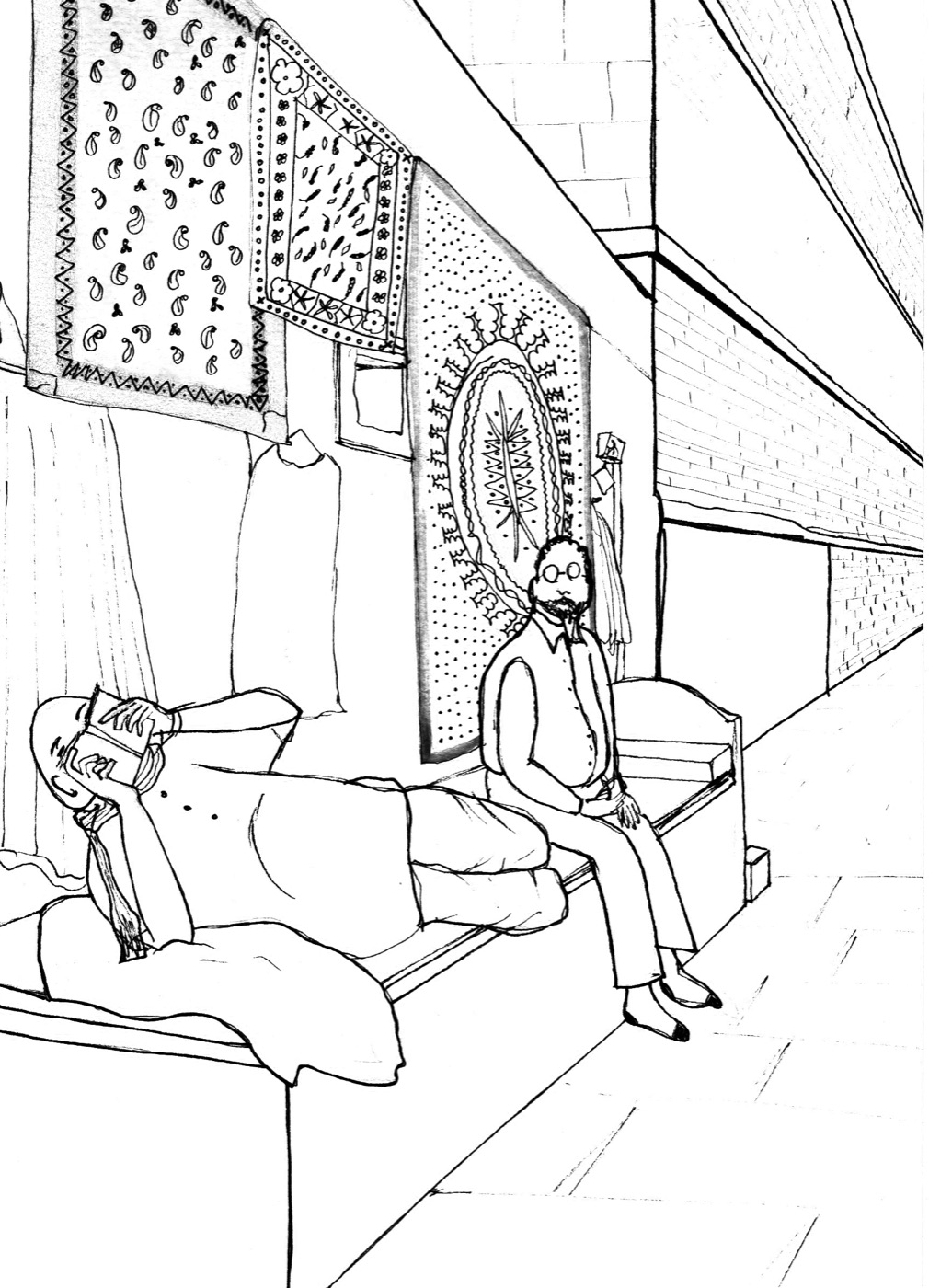
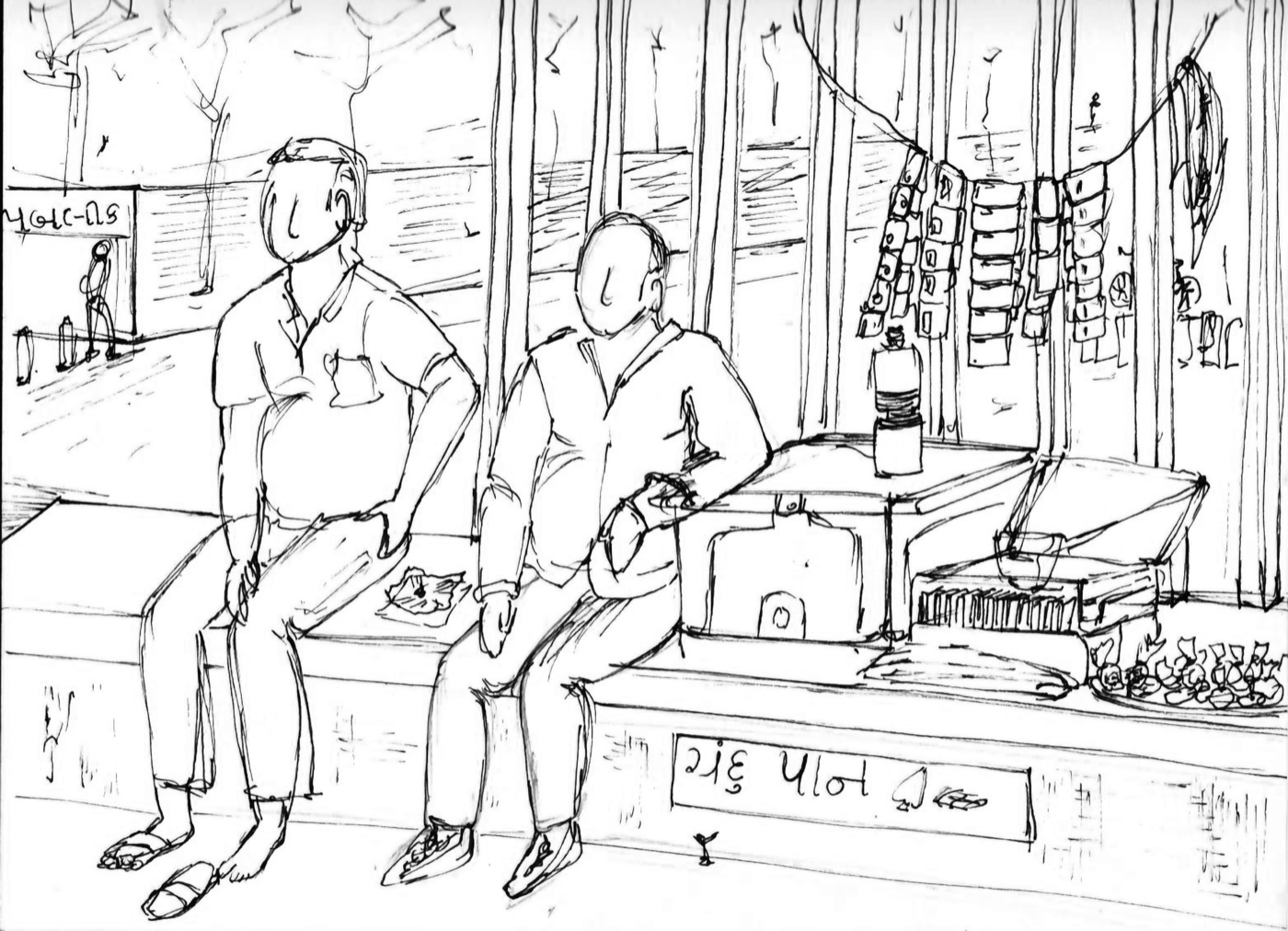
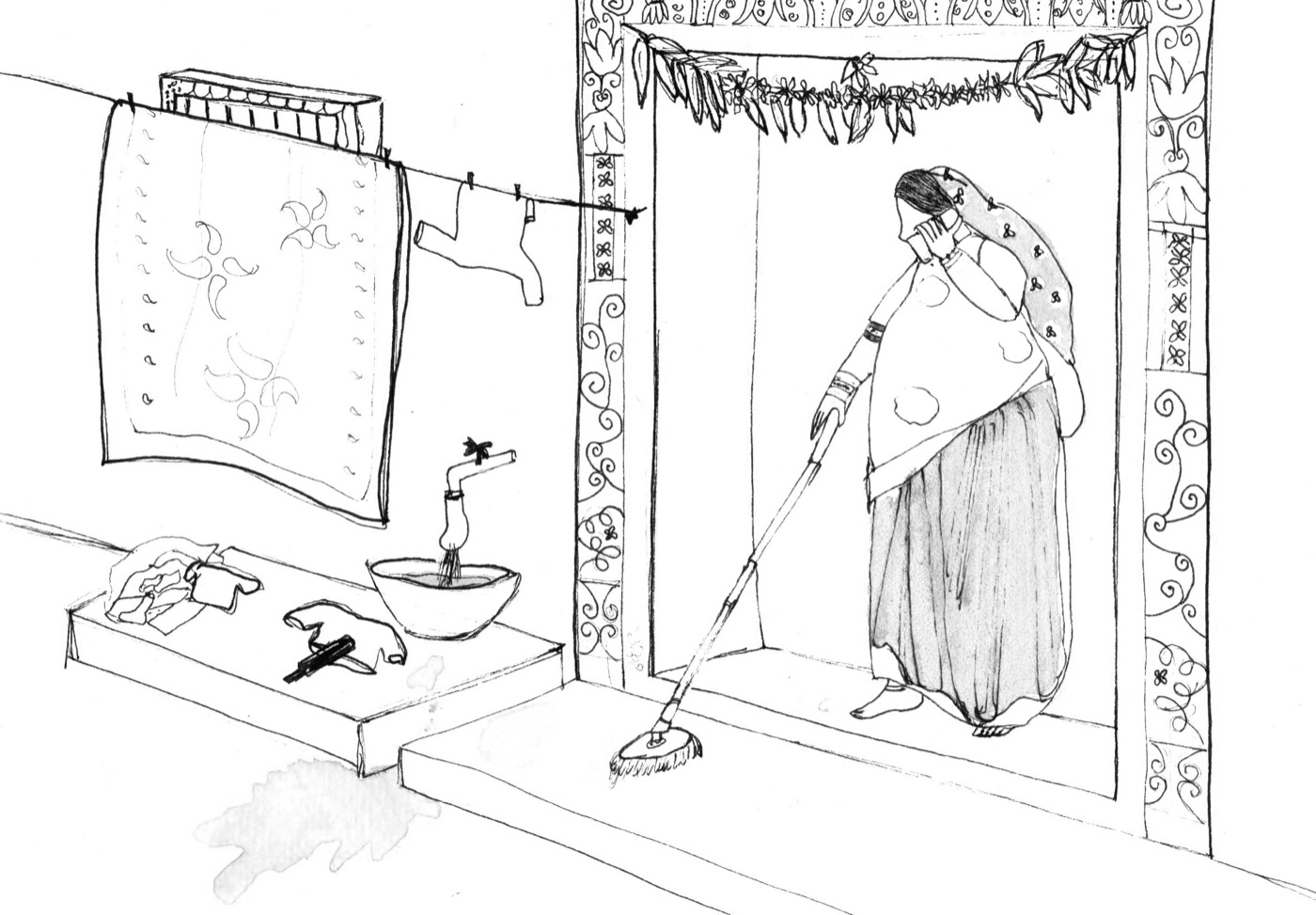
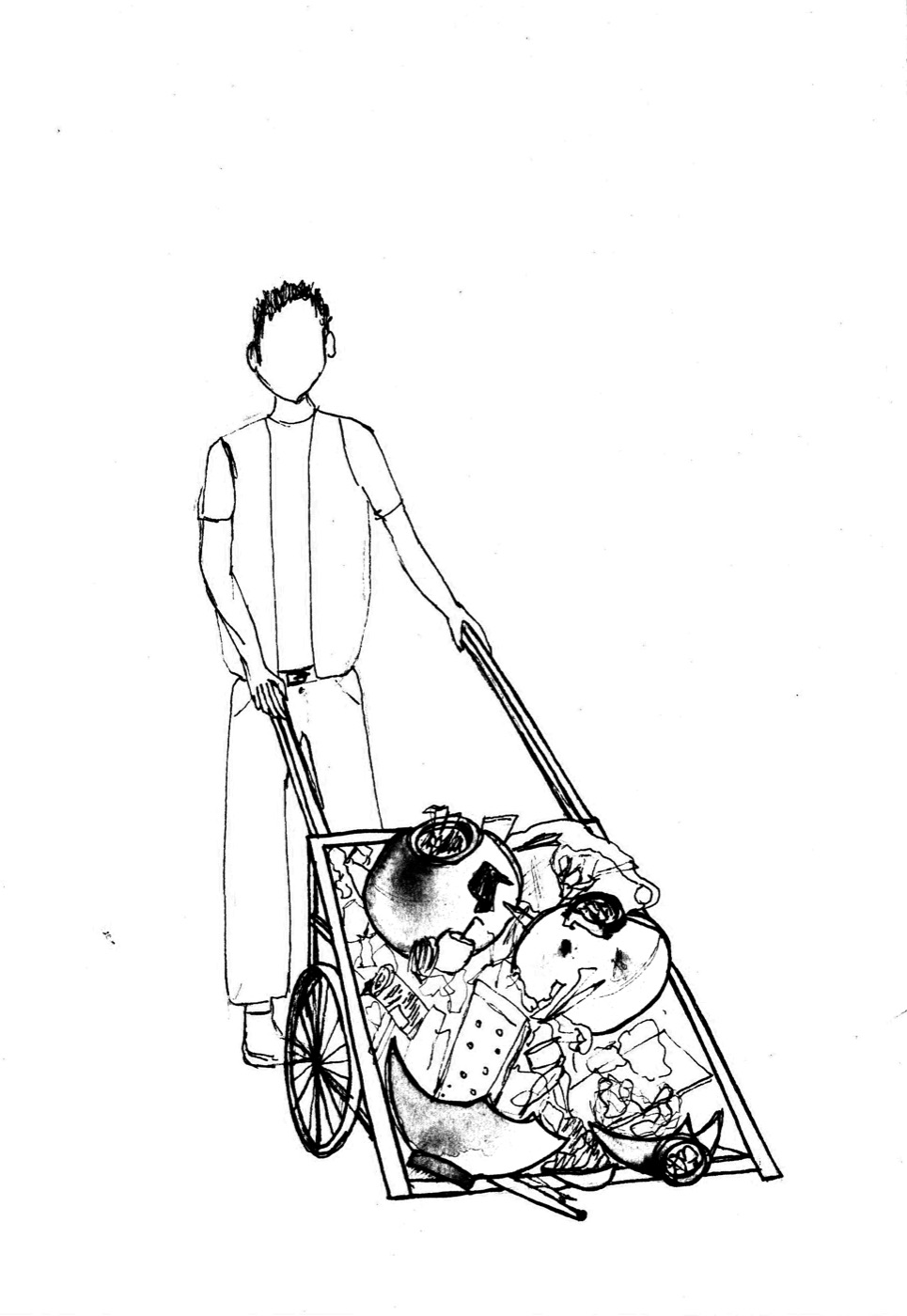
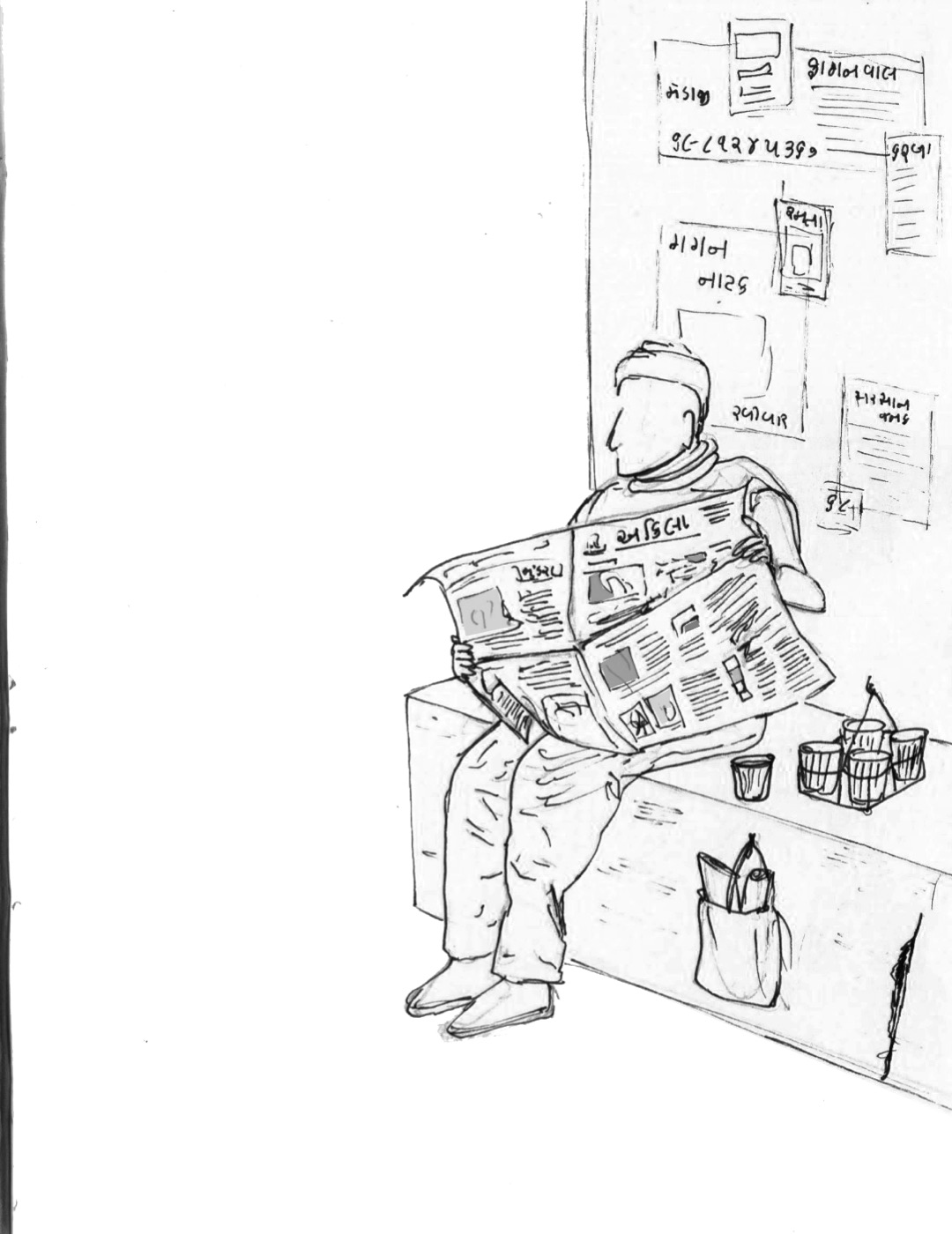
Eight pen studies of people working on the streets of Rajkot, drawn on site. A chai stall, a sugarcane press, a carpet seller, a woman doing the washing. Each one is a working position: what the person stands behind, what they reach for, and how the stall is built around them.
Open the interactive version : eight tiles you can flip to read what each drawing taught me.
Context : Rajkot, Gujarat. Drawn between 2022 and 2026
Medium : Pen and pencil on paper, drawn from observation
Why:
A street stall is a piece of architecture that someone assembled without drawing it first. The counter sits at the height the work needs, the signage is hand-lettered by whoever owns it, and the storage is whatever fits underneath. Drawing one takes about an hour, and in that hour you notice the decisions: where the gas cylinder goes so it is reachable and out of the way, why the cups are stacked on the left, how far the awning has to reach before the afternoon sun becomes a problem.
I did not set out to study anything. I wanted to draw, and the drawing is what made me look properly.
8:
I had fun:
Every one of these was designed by the person using it, adjusted over years, with no plan drawn anywhere, and this taught me a novel approach to innate user-centric design in age-old design systems that design everyday life.
Open the interactive version – eight tiles you can flip to read what each drawing taught me.

