
(Note: This project was conceptualized over the course of a year under unit Experimental 6: ‘Out of the Loop’ at the AA, 2021-22).
More information on research documentation and further architectural network design for the project can be found here.
Project Overview
The project designs ‘Get a Job’ a workplace simulation game intended for architecture students. The simulation is set in a physical architectural maze that uses carnivalesque play to reveal moments, tensions, and processes of working at architectural practices. Physical gamification tools used are:
- Quantified points system
- Clear goals and tasks
- Competitive leaderboard
- Badges and rewards
- Characters
- Interactive props
The game is a way of quantifying uncertainty/randomness in workplaces and communicating them using gamification to benefit the primary players: architecture students. It is an alternative that breaches the current unfair digital gamification feedback loop and gives the players a fair chance at winning the corporate game of searching for a job.
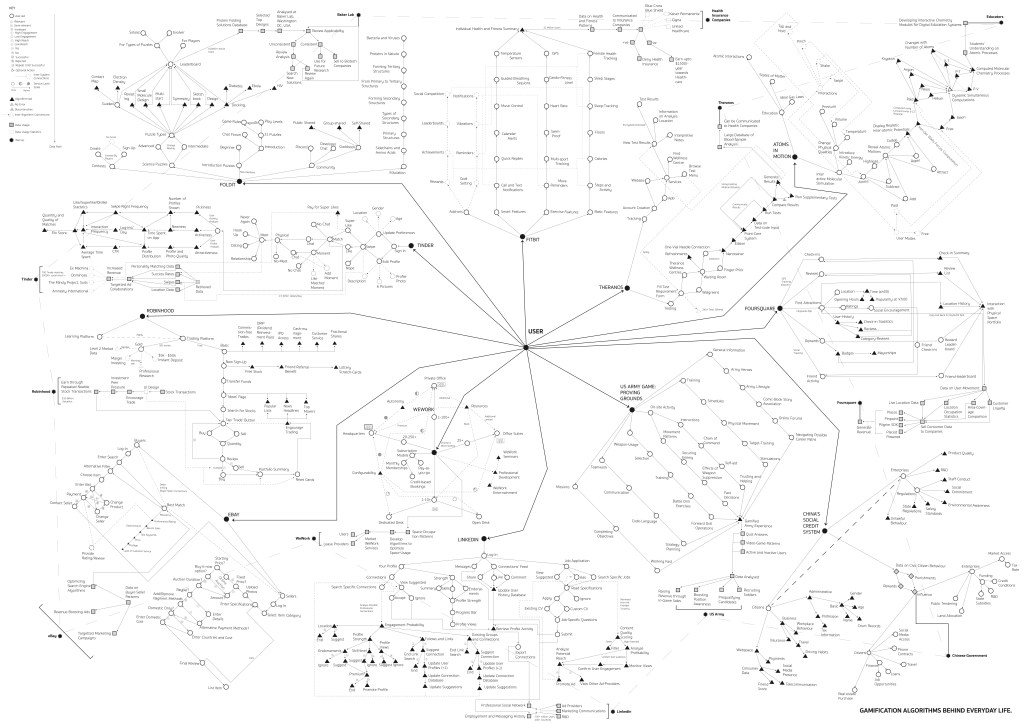

Project Drawings
Get a Job also attempts to reverse engineer gamification’s invisibility mask by making invisible feedback loops visible. Hence, players can win not only by getting a job, but also by actively learning and experiencing tensions and moments from a workplace setting (which are not broadcasted on job-finding platforms like LinkedIn).

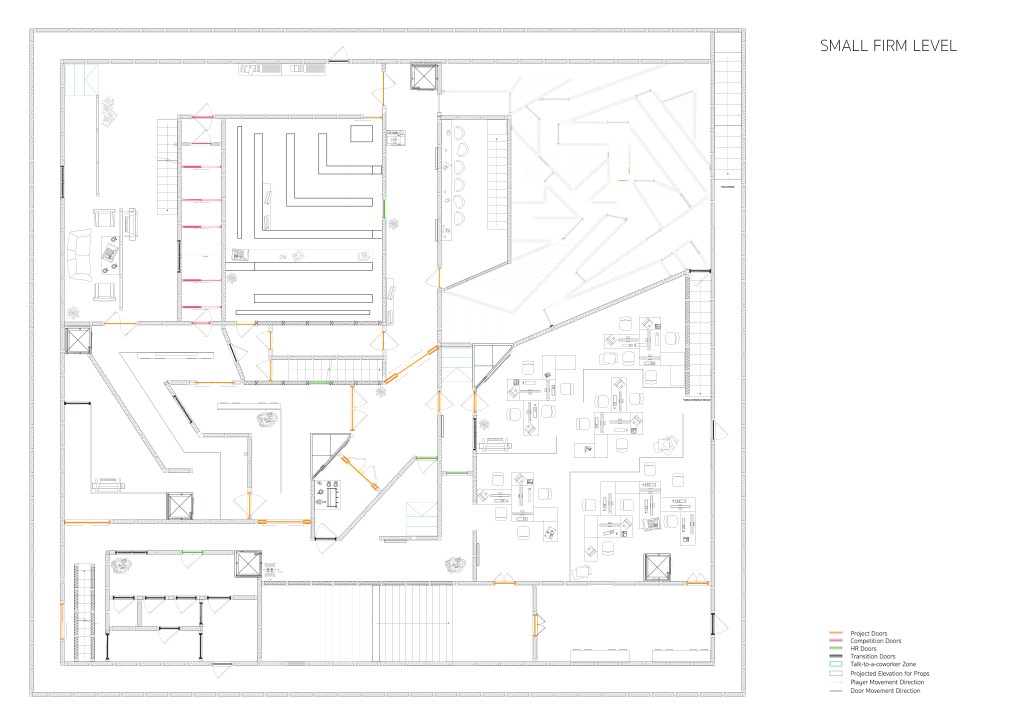


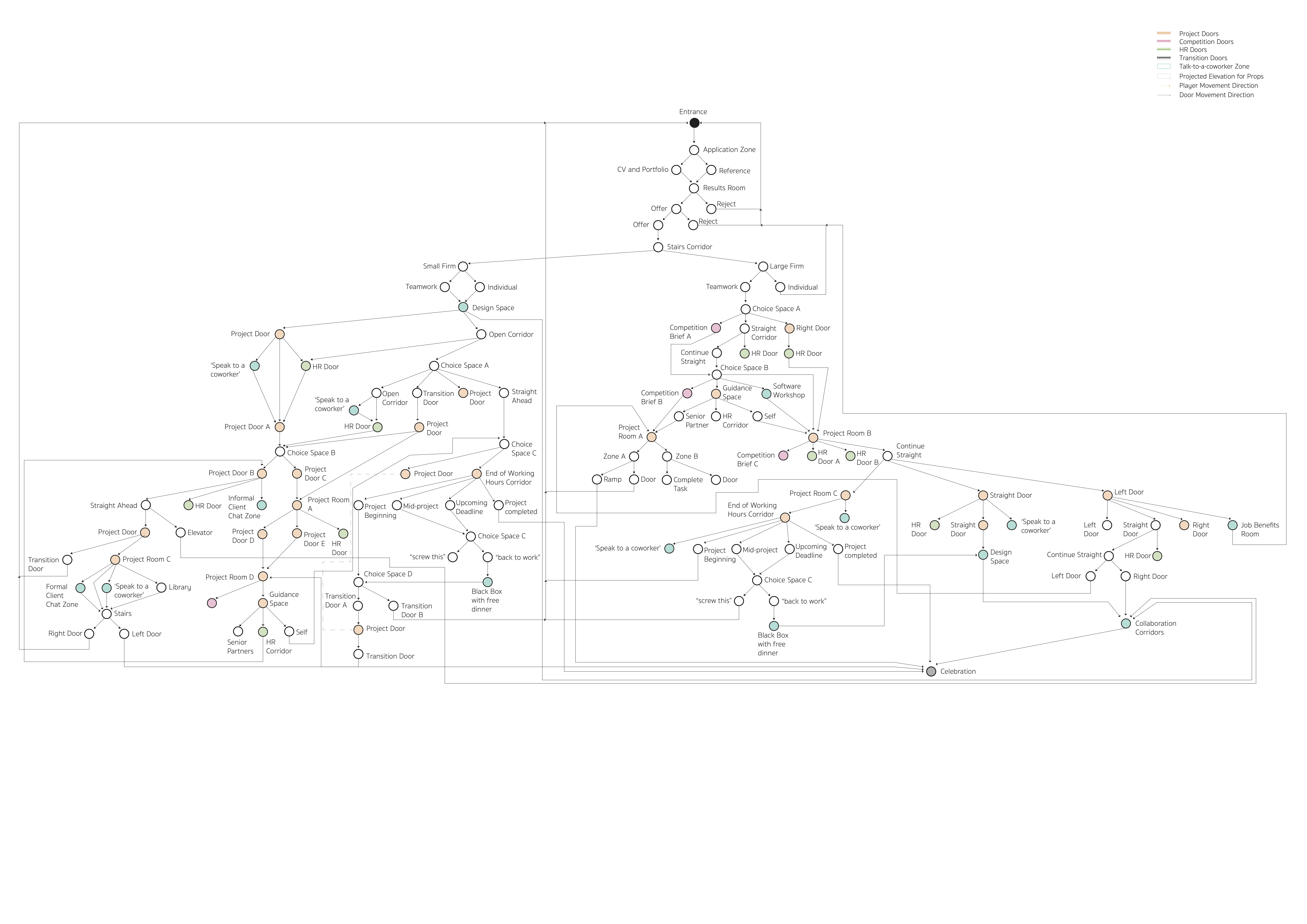

It builds upon the idea of choreographed temporality where specific areas can be arranged and deployed to create temporary spaces and corridors. Stairs and ramps are organised in a manner that players often cannot see the end-point. Doors are either iterative, chronological or unopenable. Corridors themselves are inhabitable and play on the notion of how players know there’s a path yet consciously have to make choices which can have repercussions. This proposal realistically also alludes to how gamification is divisive and unavoidable: it masks existing complexity.
Players don’t win by being in control of the system, but they win by navigating the system and playing the system because ultimately, working is a game.
Additional Links:
Project Book: The full record of the year, running from the preceding research on gamification algorithms, physical games and escape rooms, through the game mechanics and the level design for the large and small firm floors, and ending on the simulation decision tree that came out of the game.

