
May 2021, First Year
T3B2 was a competition brief. Students had to work in groups to design a Public House at the site of Huguenot House in London, UK. We had the option to either Redesign or Reuse the existing structure.
Group members: Aaryaa Kamdar, Dana Ayad, Nour Ibrahim, Laure Ségur.
As a group, we wanted to create a contemporary space that catered to the diverse demographic groups that exist around Leicester Square. Hence, we created a vertical ‘Senseorium’ with zones for individualised and combined sensory-stimulatory spaces. Consequently, our project is titled ‘Sens(e)ational’.
Personal Output: Quantifying ‘Sens(e)national’
Along with the group submission, every student had to submit a personal output for their project. We were given complete freedom to choose the format!
For my personal output, I wanted to quantify the sensory experience within the proposal. I began by creating a detailed Exploded Isometric diagram for the entire structure. I then mapped the level of sensory stimulation for each sense: Sight, Scent, Sound, Touch and Taste.
Next, I outlined an ideal circulation path at a specific time (August 03, 9:30 pm) spanning the entire space from ground level to the eighth floor. I superimposed the circulation path and mapped sense to create a cumulative graph showing varying sensory stimulations throughout the entire space along the outlined path.
Using mathematical functions, I approximated the curves for each sense. Mathematical functions help with the quantification of the sensory experience. I then used calculus to find the area under the curves for the first three spaces.
The output is a single numerical value that outlines the level of sensory stimulation in one space, for one sense. While I only did it for the first three spaces, the same can be done to compare levels of sensory stimulations in various spaces throughout the proposed structure.
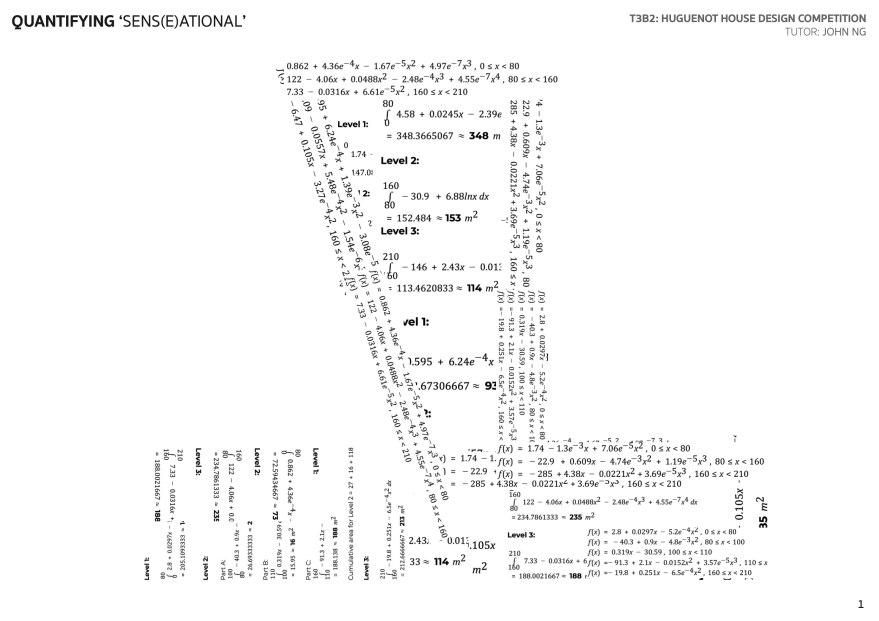
Quantifying the levels of sensory stimulation in the proposal. 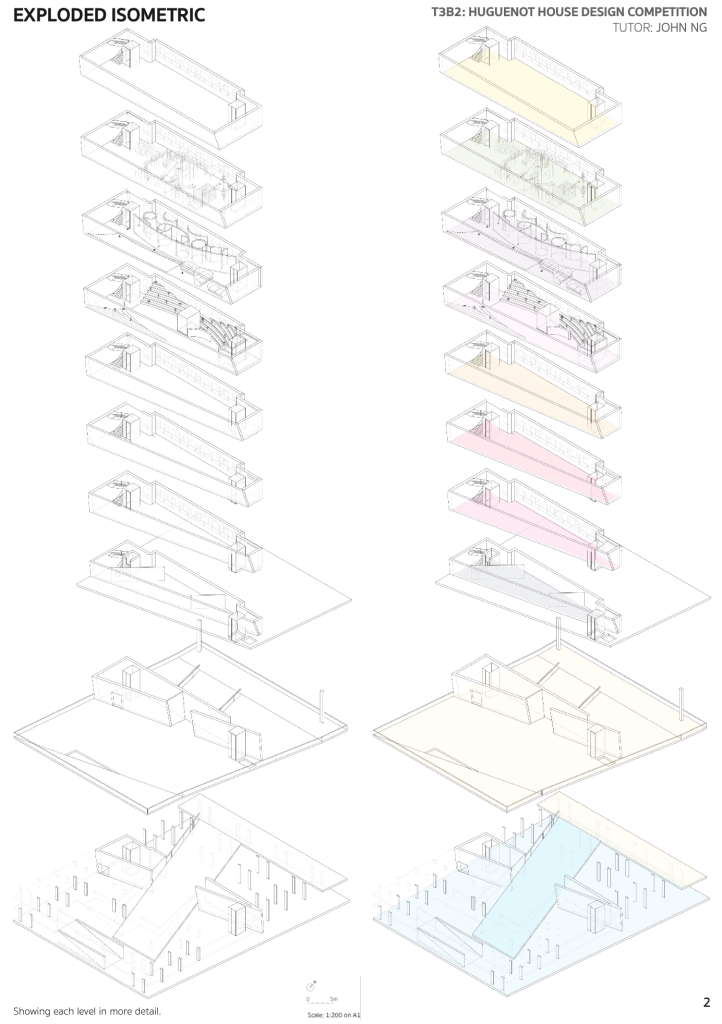
Exploded Isometric Diagrams. 
Exploded Isometric Diagrams: Zoomed-in Screenshots. 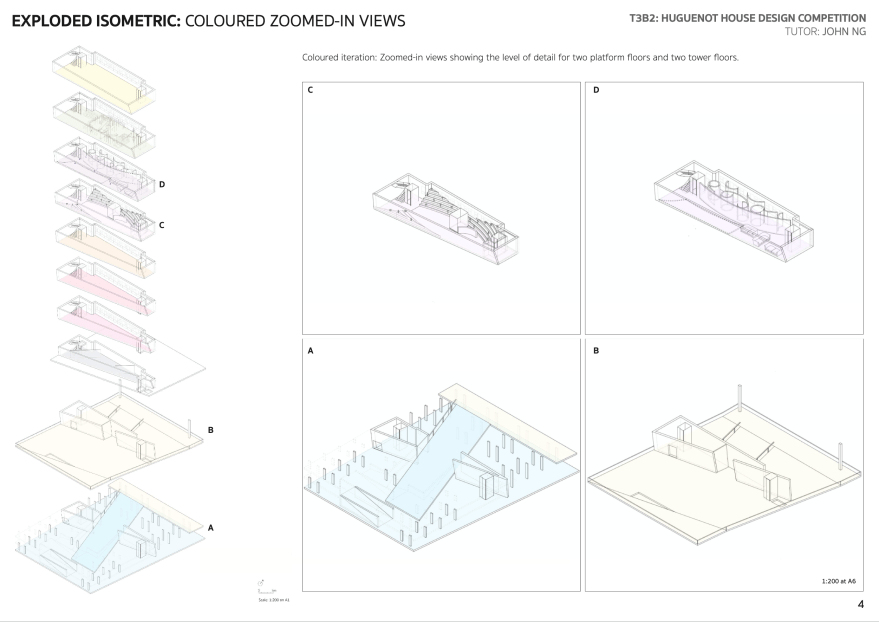
Exploded Isometric Diagrams: Zoomed-in Screenshots. 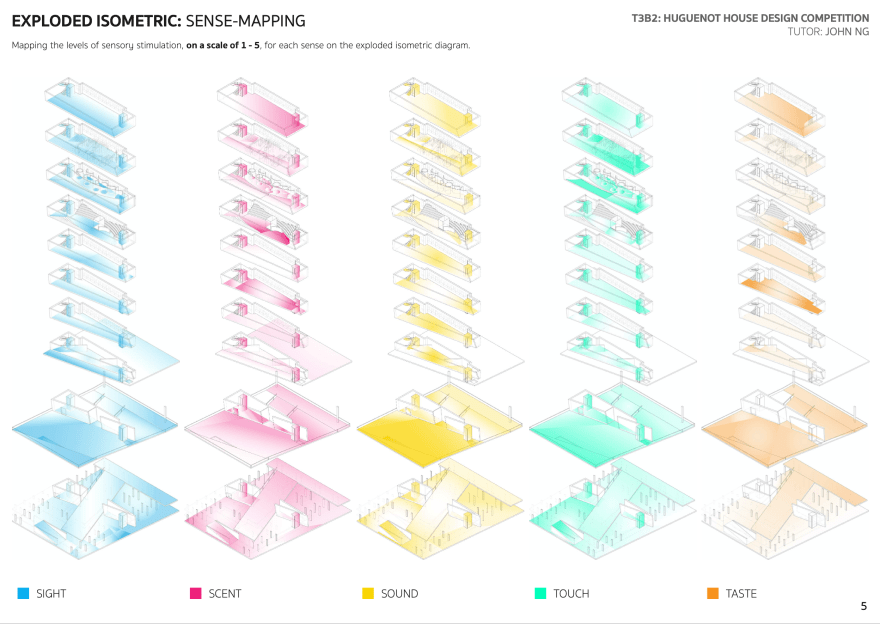
Mapping Sensory Stimulation. 
Mapping Sensory Stimulation: Sight. 
Mapping Sensory Stimulation: Scent.. 
Mapping Sensory Stimulation: Sound. 
Mapping Sensory Stimulation: Touch. 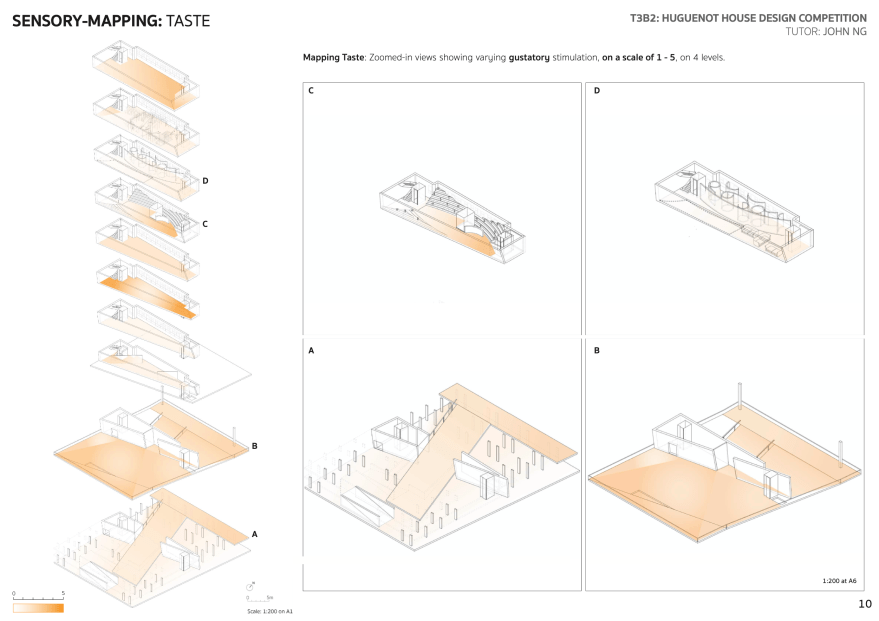
Mapping Sensory Stimulation: Taste. 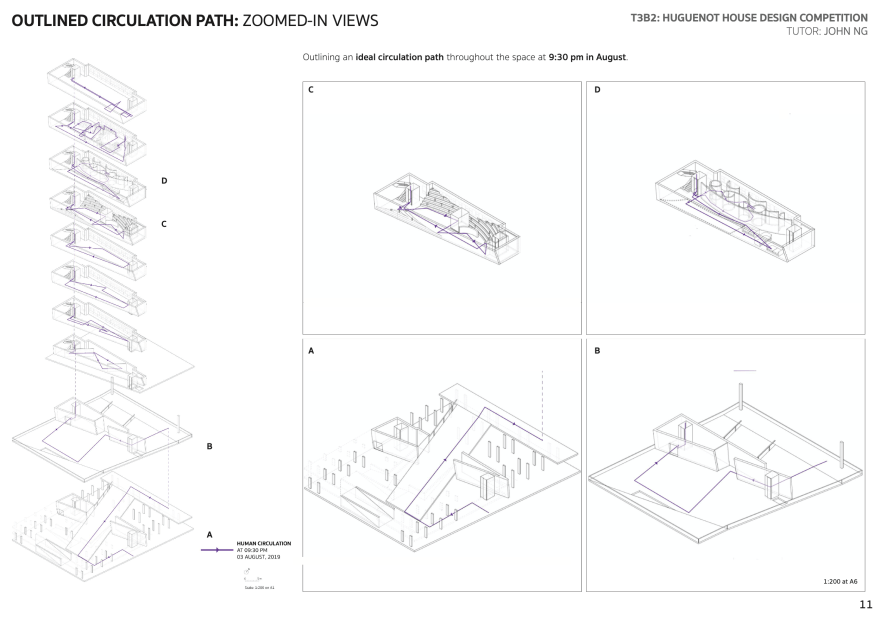
Outlining an ideal circulation path on August 03, 9:30 pm. 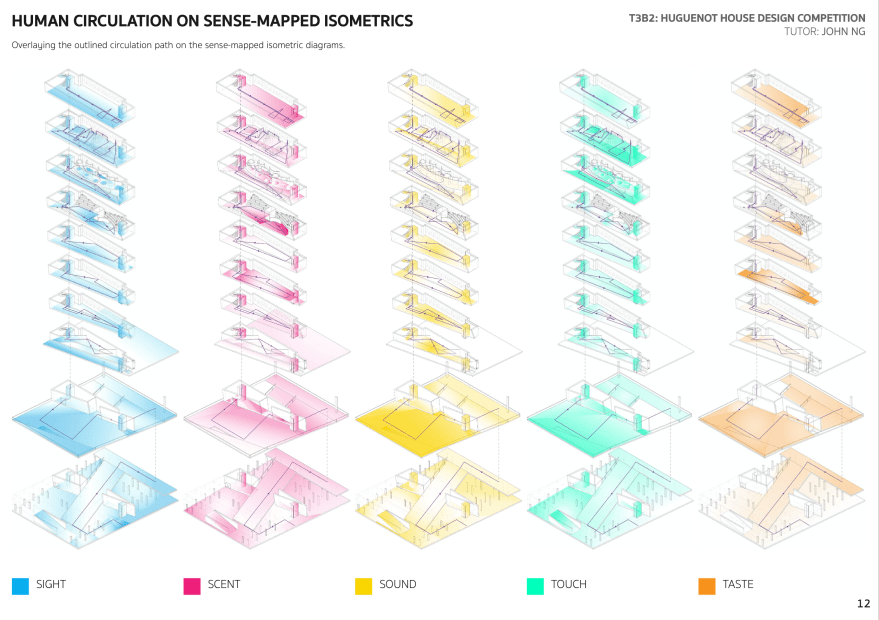
Overlaying the circulation path and mapped senses. 
Graphing sensory stimulation for each sense along the circulation path. 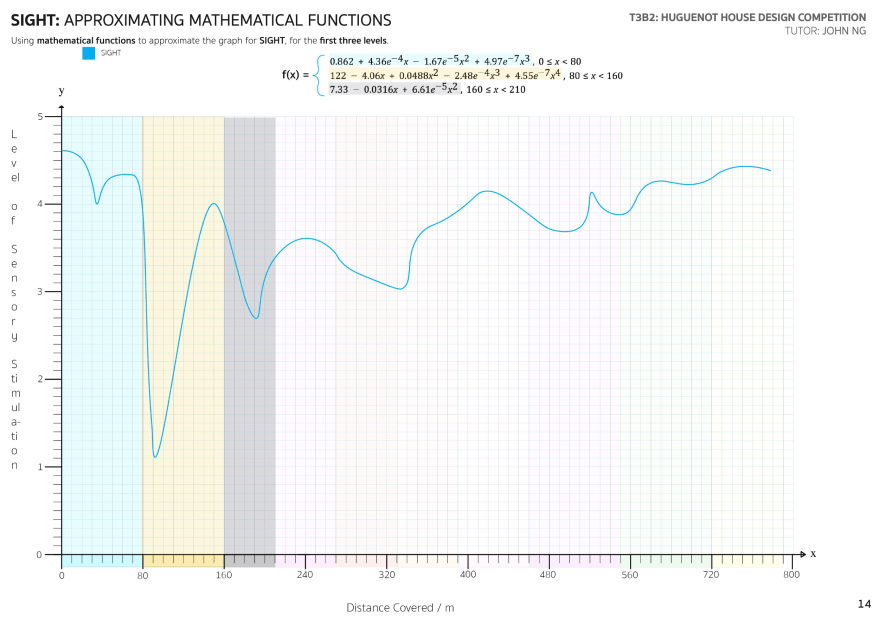
Approximating the curve using mathematical functions: Sight. 
Approximating the curve using mathematical functions: Scent. 
Approximating the curve using mathematical functions: Sound. 
Approximating the curve using mathematical functions: Touch. 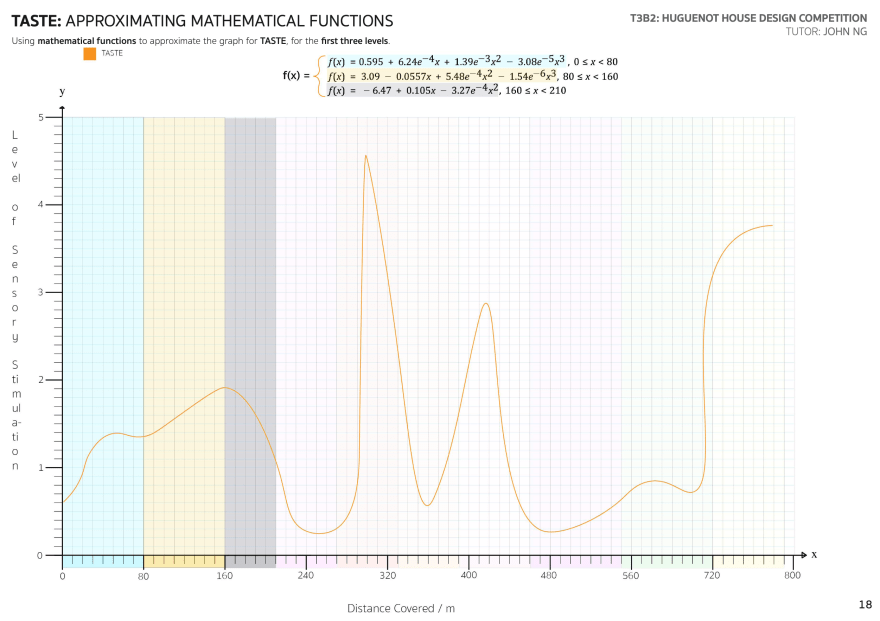
Approximating the curve using mathematical functions: Taste. 
Using Calculus to calculate the area under the curve for the first three spaces (for sight stimulation). 
Using Calculus to calculate the area under the curve for the first three spaces (for scent stimulation). 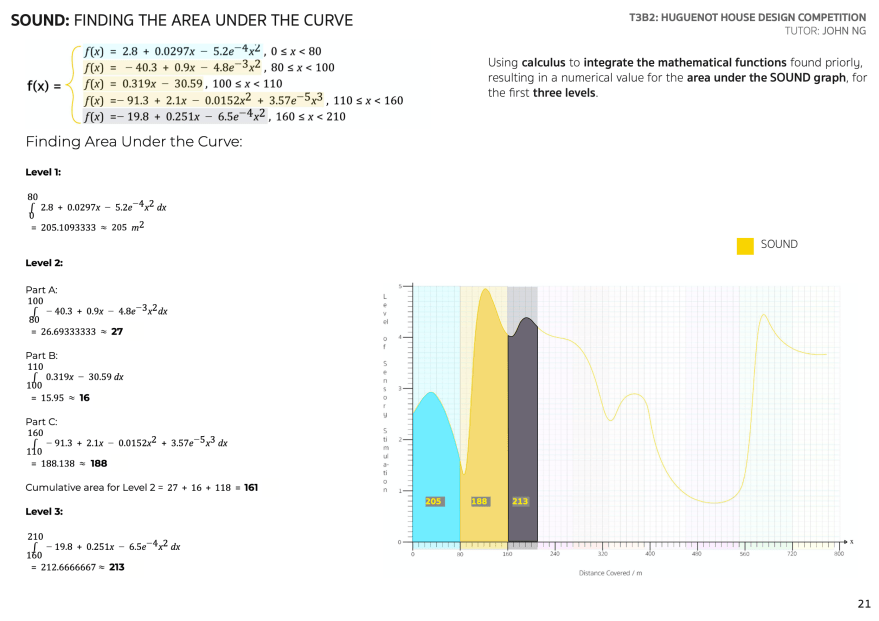
Using Calculus to calculate the area under the curve for the first three spaces (for sound stimulation). 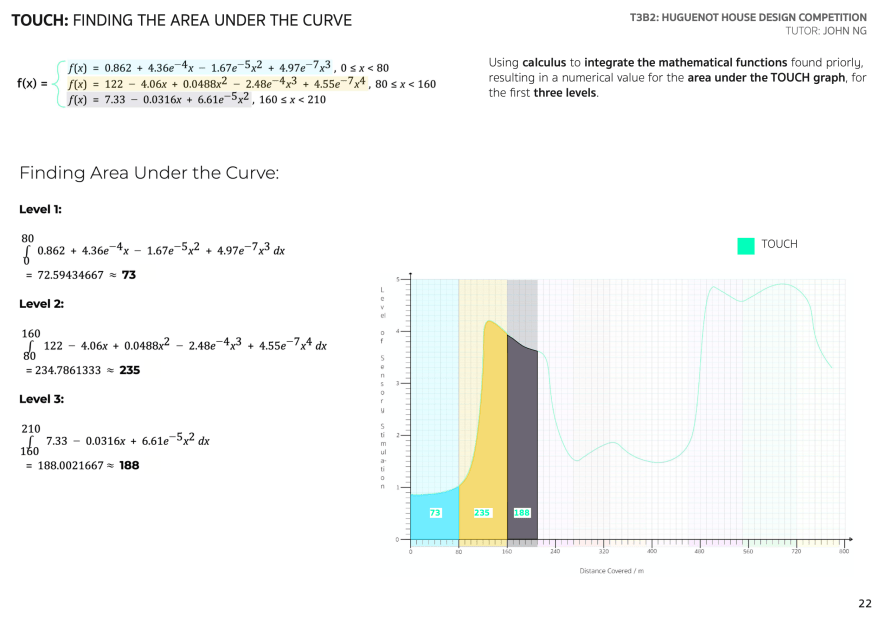
Using Calculus to calculate the area under the curve for the first three spaces (for touch stimulation). 
Using Calculus to calculate the area under the curve for the first three spaces (for taste stimulation). 
Output: A single numerical value outlining the level of sensory stimulation in one space, for one sense. 
While I only did this for the first three spaces, the same can be done to compare sensory stimulations in various spaces throughout the proposal.
The mathematical study can be extended in various ways. Advanced mathematical modelling techniques can be used to derive a model that gives a single numerical value for an individual’s journey through the proposal. The inputs would be the sequence of moving through levels in the platform and tower, and the output would be the single value that quantifies the level of sensory experience in the structure.
Final Submission: Sens(e)ational.









This series of images shows all our submissions for the project. We also had a video submission which can be viewed here.
(Note: These pages are from my individual portfolio, but the initials of every group member that collaborated to the drawing/diagram are mentioned on the page).












The competition brief was an interesting journey, leading to a holistic understanding of how designing sensory stimulations are an integral part of designing a space. My personal output helped me gain a deeper understanding of how the quantification of sensory experiences can be used to make architectural decisions, such as material choices or partition positioning to alter the stimulation levels for particular senses.
 Aaryaa Kamdar