
FIRST YEAR, Term 2 Brief 2: Modes of Life. New Essential. Negotiations. Temporalities.
4 Weeks , February – March 2021
T2B2 was a continutation of T2B1, and here we questioned human occupation of a territory. The focus was to learn how to design by using iterations and processes.
In T2B1, we translated our findings to catalogues of specific architectural spatial conditions. We used T2B1 discoveries to create design iterations for:
- Spaces accommodating 10 people
- Spaces accommodating 100 people
- Spaces accommodating 1000 people
From my catalogues for spaces of collective experience and spaces of intimacy (from T2B1), I chose three main spatial conditions (amongst others):
- Organization of architectural elements in open spaces to convene playfulness and non-stagnancy.
- The role of an area as a multifunctional space to accommodate different activities.
- Non-architectural elements as guides for spatial organization.

I used these three spatial conditions as starting points for my designs. I focused on playfulness and non-stagnancy convened through architectural elements like stairs and ramps.
For all designs, my intended audience were individuals seeking creative inspiration, particularly artists, derived from the crowd at Hotel Chelsea (physical case-study from T2B1).
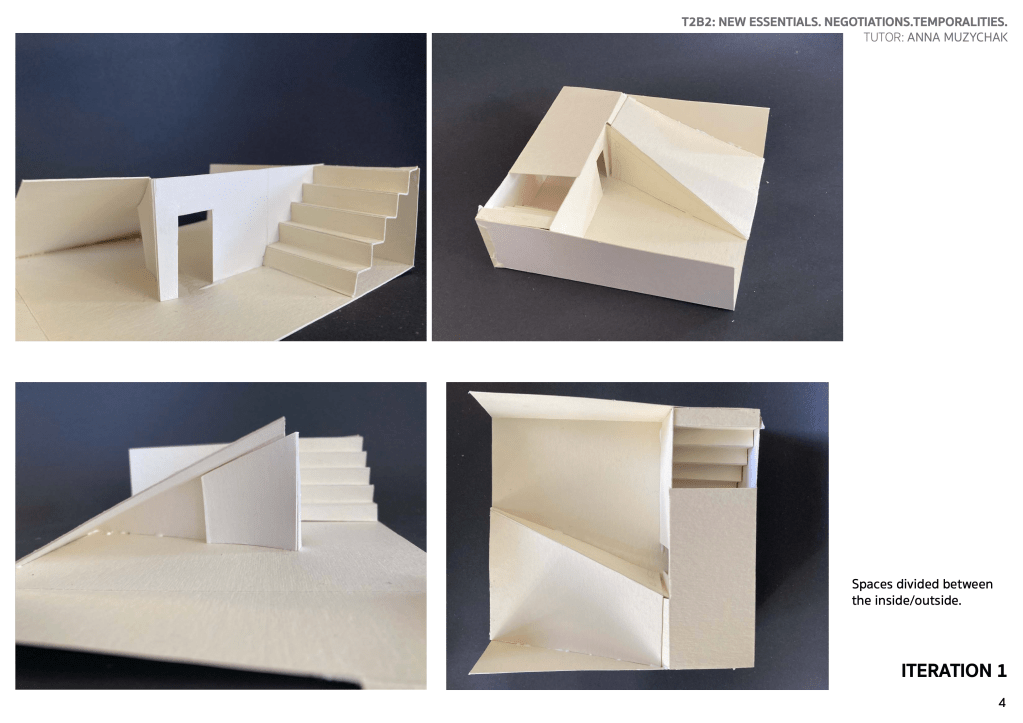
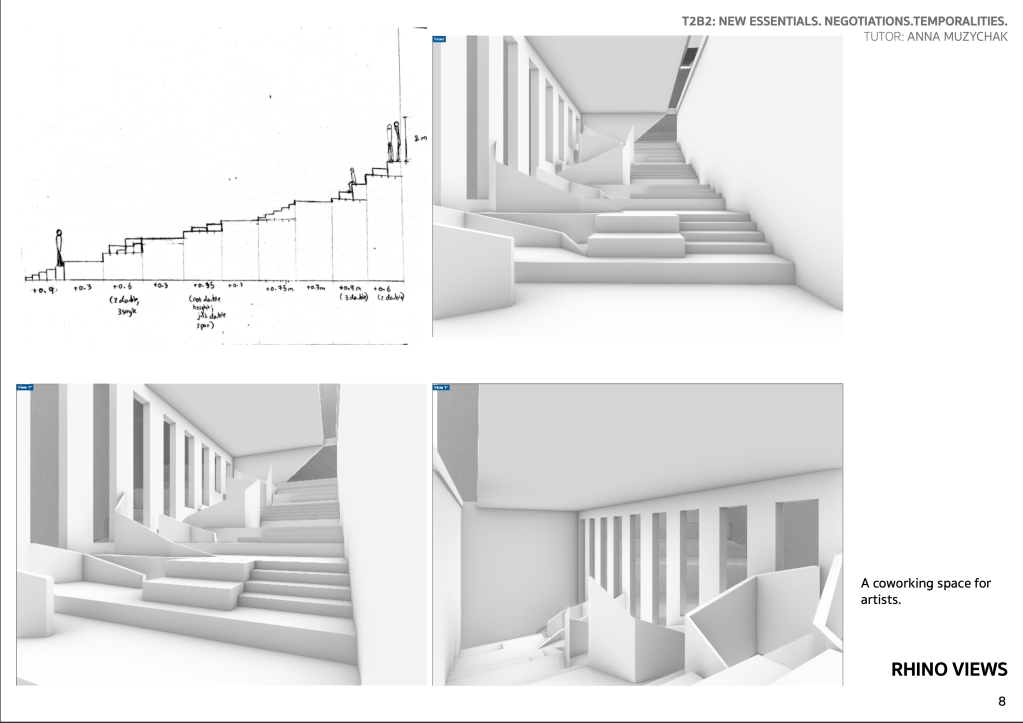
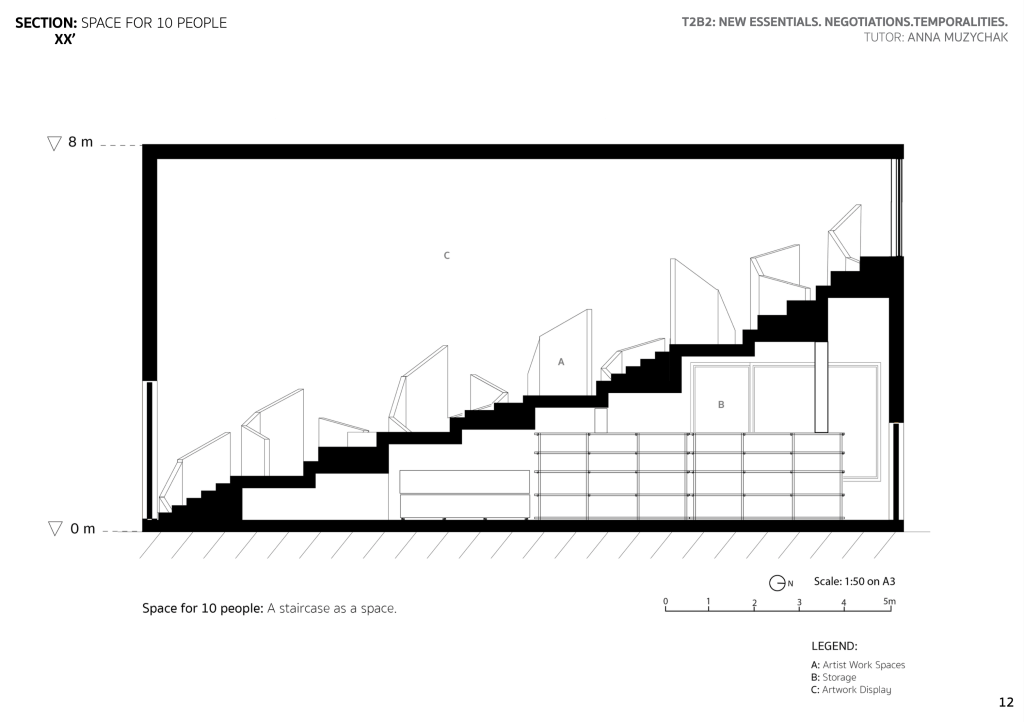
Space for 10 people
An artists’ workspace organised on a staircase.
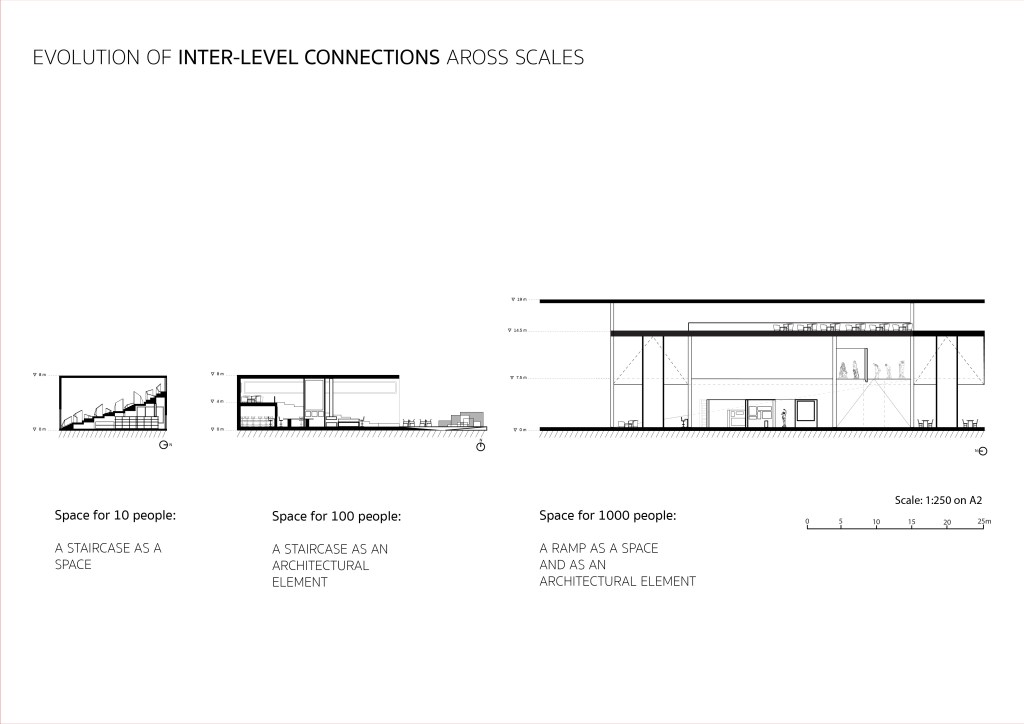
The staircase acts as a space.





Space for 100 people
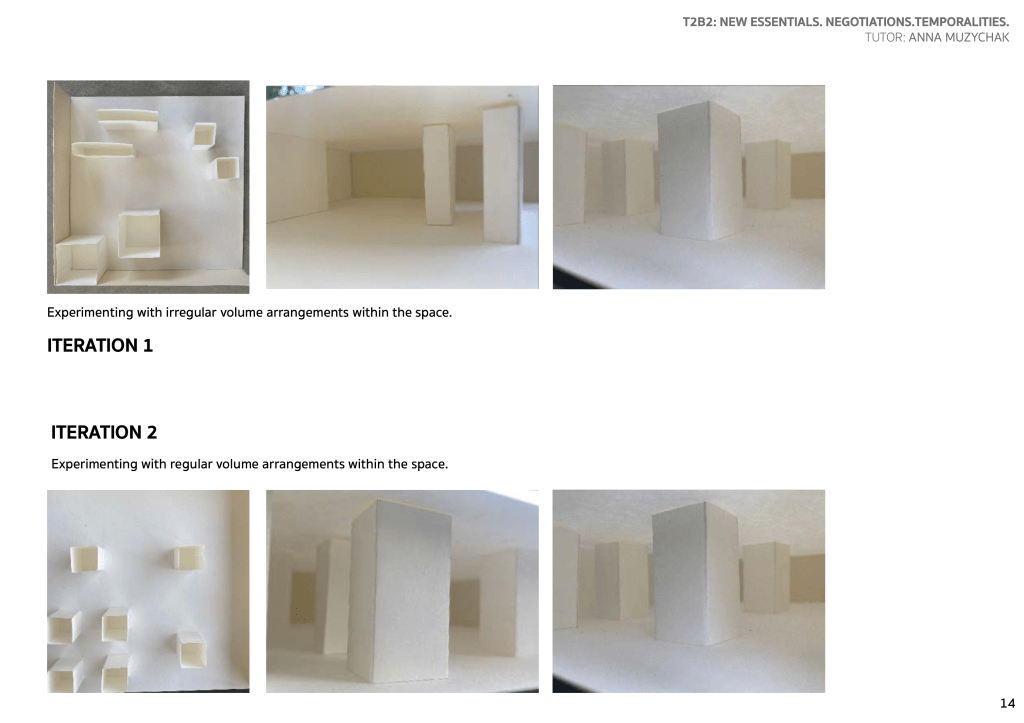
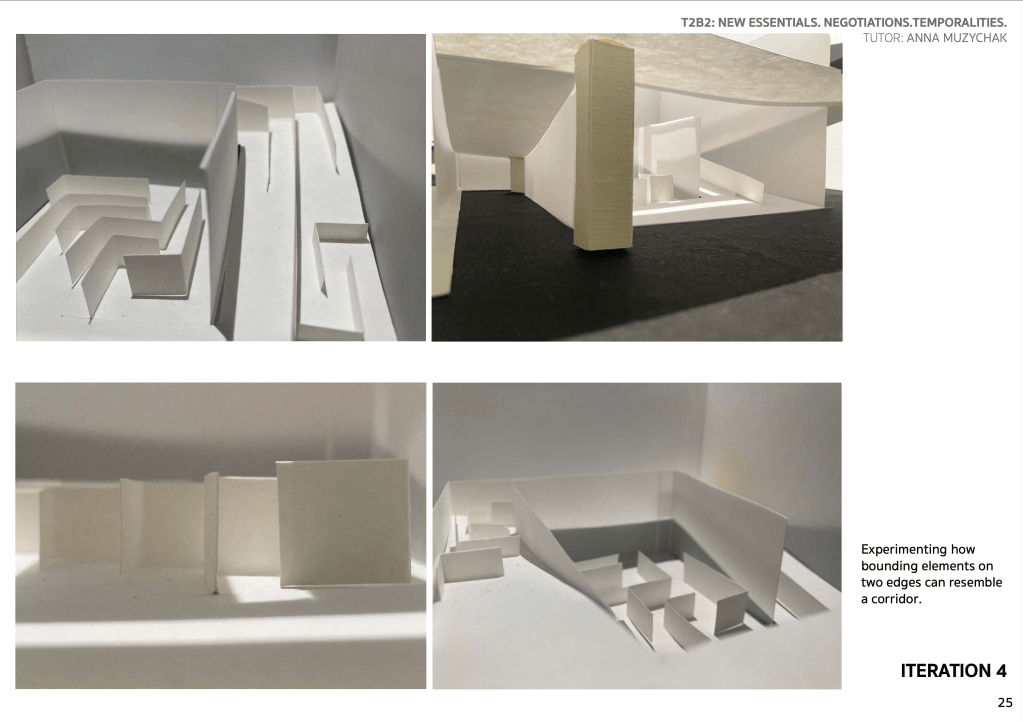
An artists’ workspace and lounge organised in a space with open, semi-open and closed areas.
The staircase acts as an architectural element.


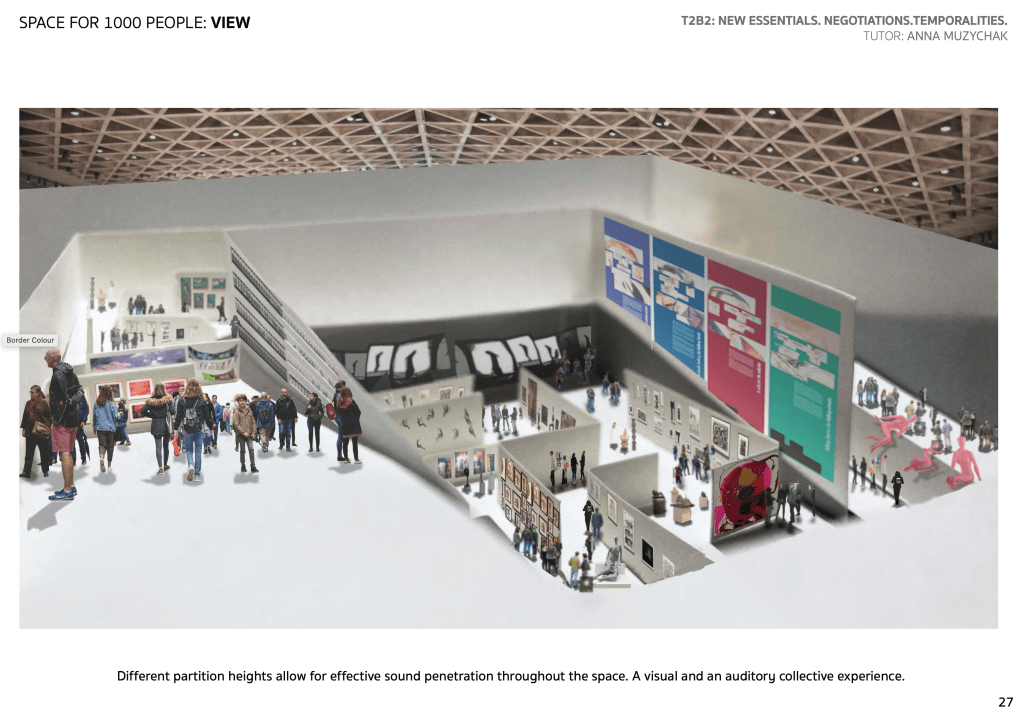
Space for 100p people
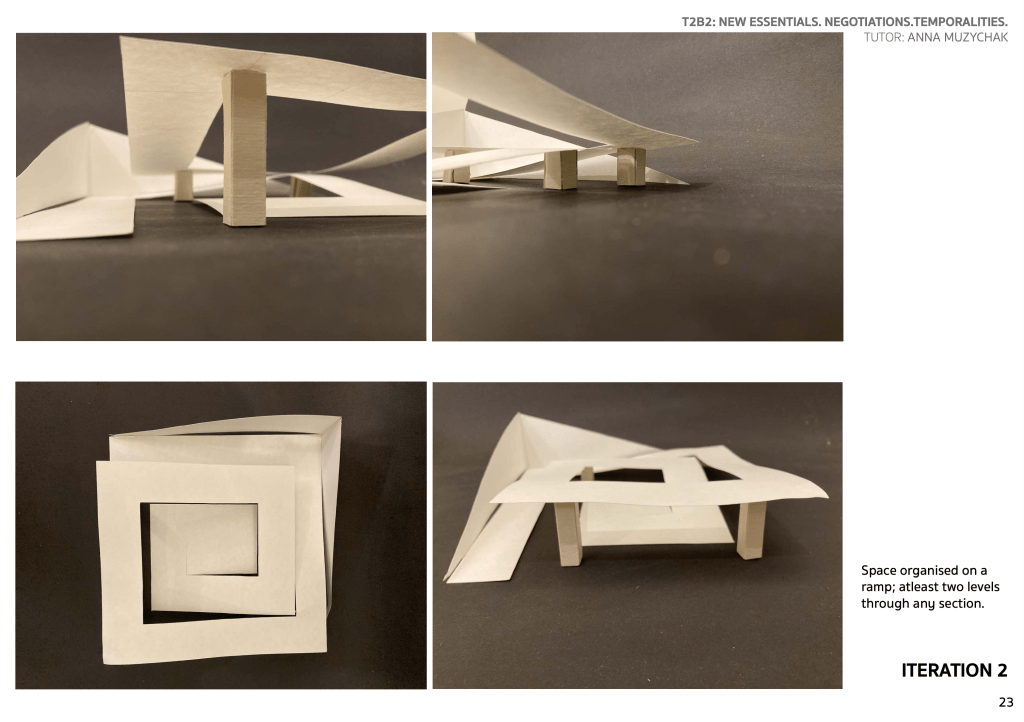
An artists’ gallery lounge organised on a ramp.
The ramp acts as an architectural element AND as a space.





Comparison
Reiterating the primary spatial condition:
Playfulness and non-stagnancy convened through architectural elements like stairs and ramps.
I made a diagram to show the evolution of inter-level connections across the three different scales:
 Aaryaa Kamdar