
FIRST YEAR, Term 2 Brief 1: Modes of Life. Parameters. Regulations. Behaviours.
4 Weeks , January – February 2021
Overall, Term 2 was focused on questioning how we inhabit space.
In T2B1, We explored unchartered modes of life by studying spaces through their contexts, activities and human habits.
Outputs:
- Unfolded drawing for the Physical Case Study: Hotel Chelsea, USA.
- Unfolded drawing for the Fictional Case Study: ‘The Mark on the Wall’ by Virginia Woolf.
- Catalogue for Spaces of Collective Experience
- Catalogue for Spaces of Intimacy.
In my brief, I studied one physical case study and one fictional case study. I then synthesised a catalogue for spaces of collective experience and a catalogue for spaces of intimacy based on the spatial conditions explored in both case studies.
Unfolded Drawing for Hotel Chelsea
The unfolded drawing shows how the volume of space occupied by an individual changes over time in a Single-Occupancy-Room in Hotel Chelsea, NYC, USA.


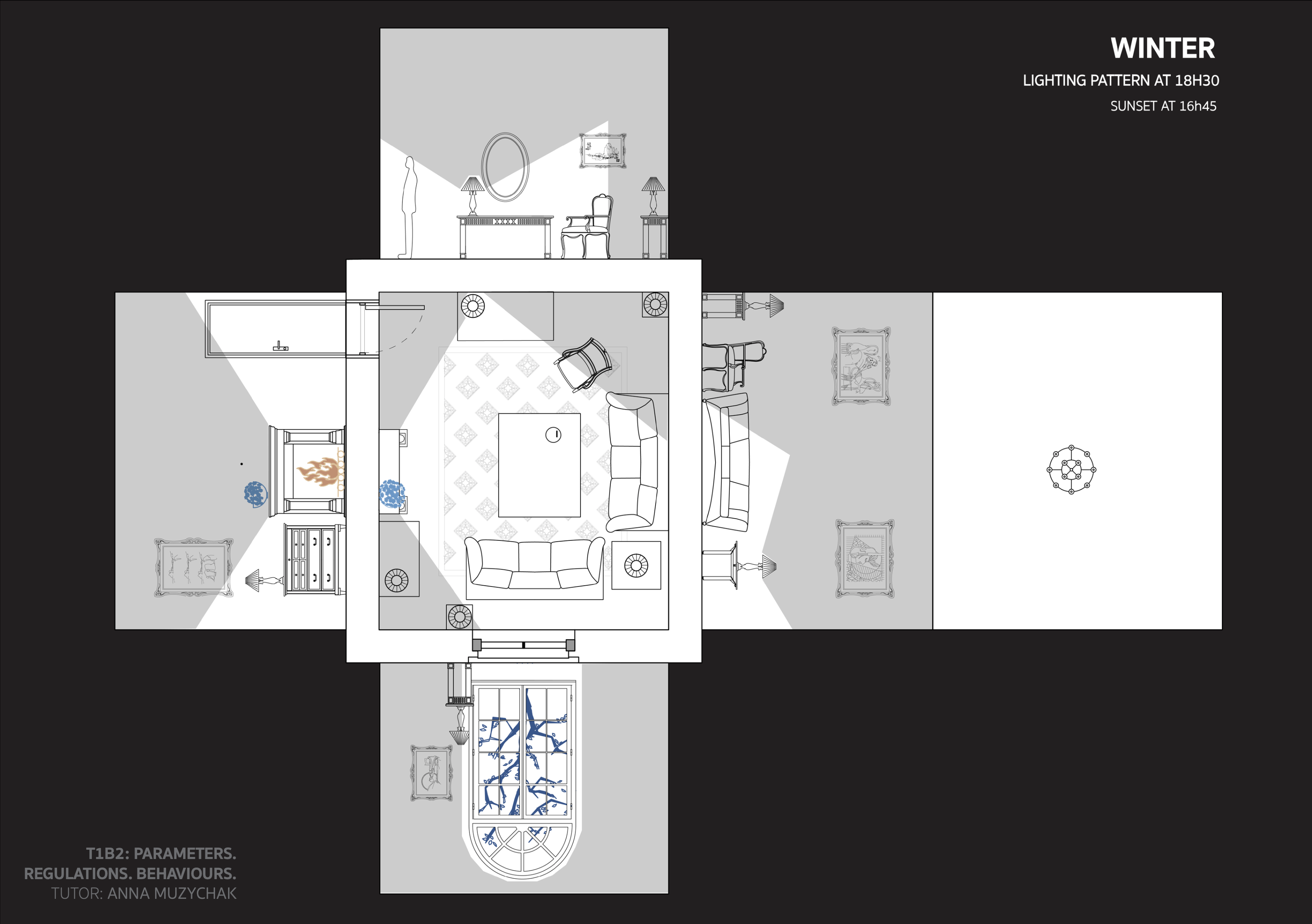
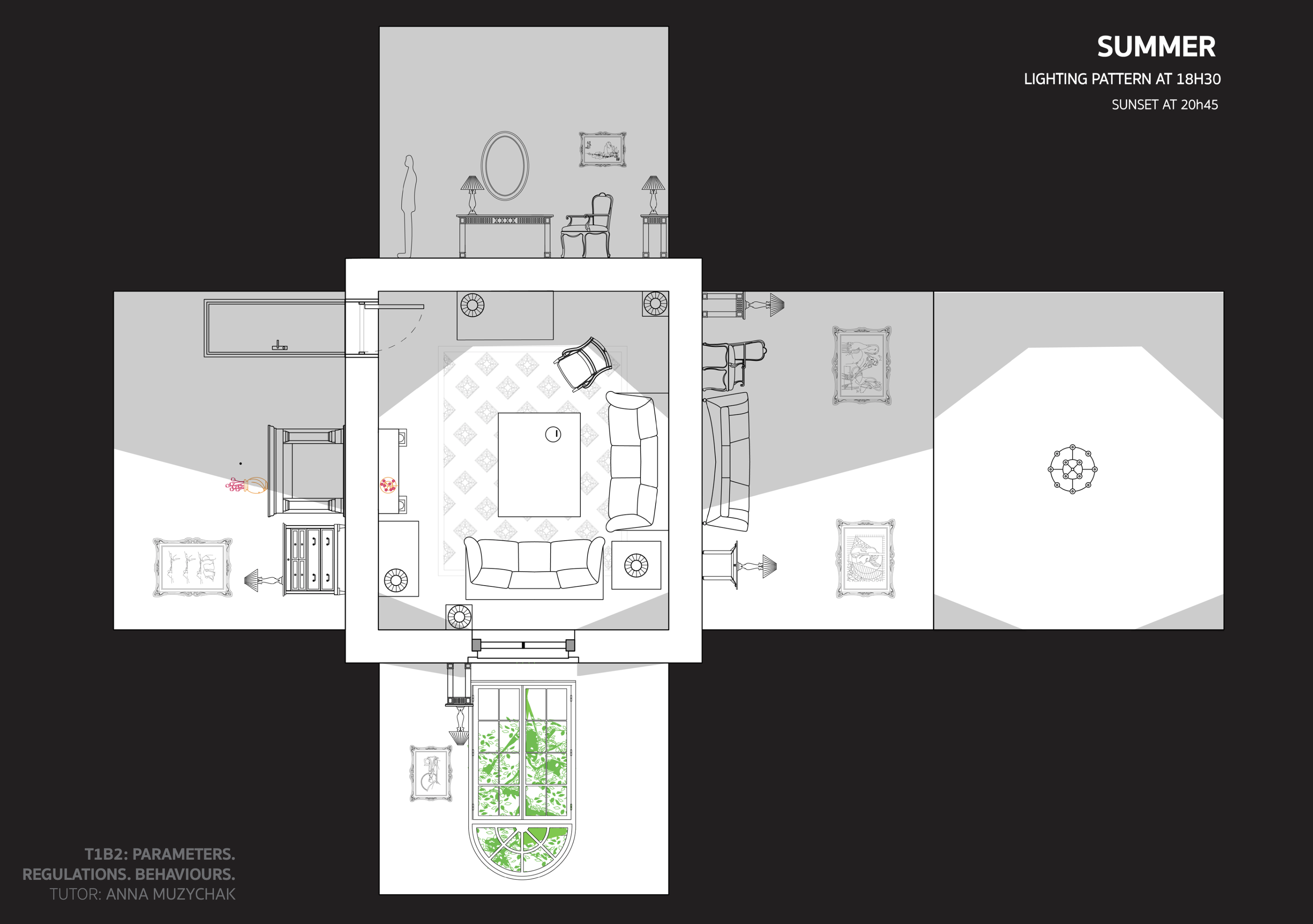
Unfolded Drawing for ‘The Mark on the Wall’.
The unfolded drawing shows how the volume of space occupied by an individual changes over 4 seasons.
Using specific architectural cues from the story, I visualised what the space would look like in a house built in the early 1700s, and the story set in the early 1900s.



Catalogue for Spaces of Collective Experience
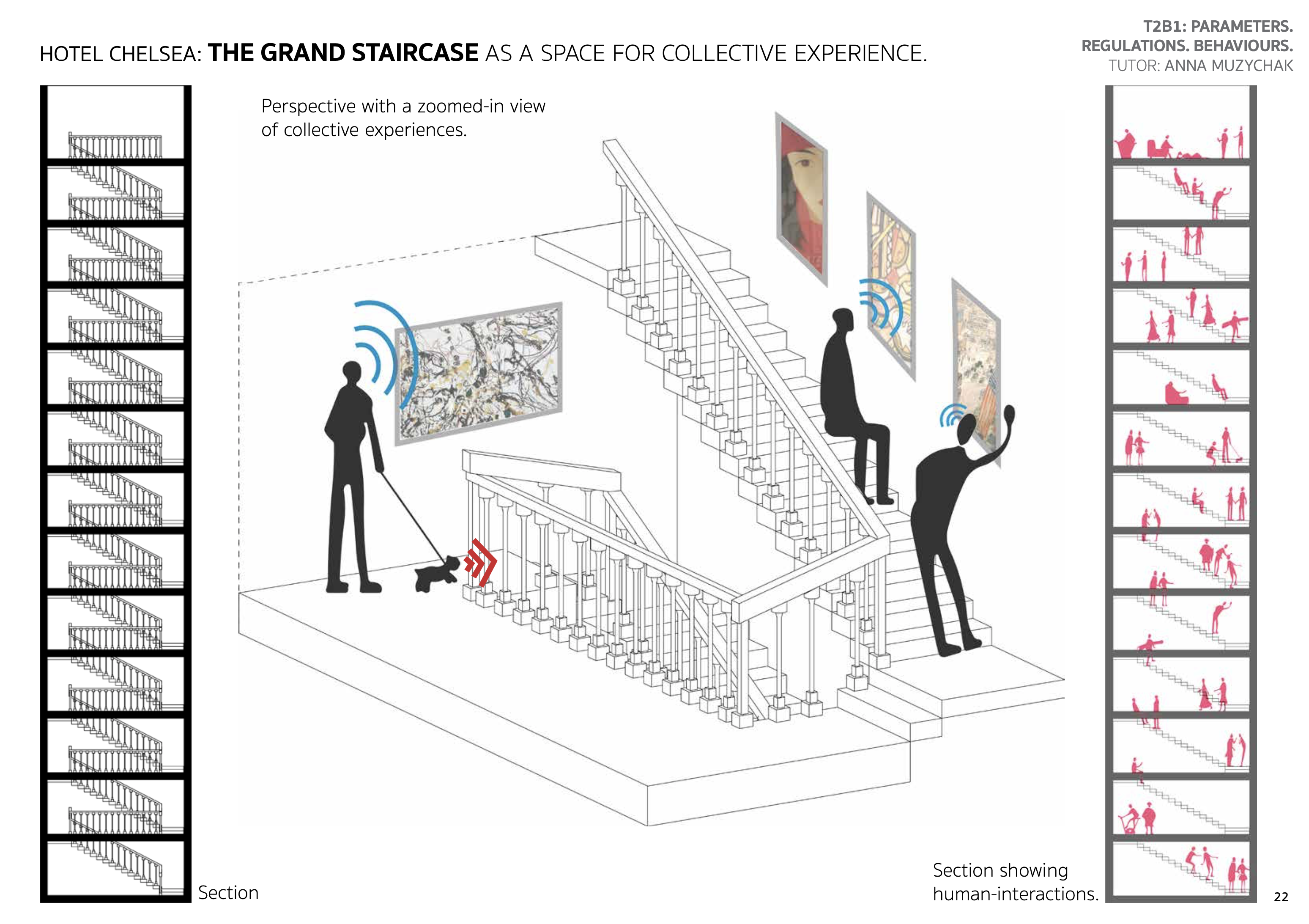
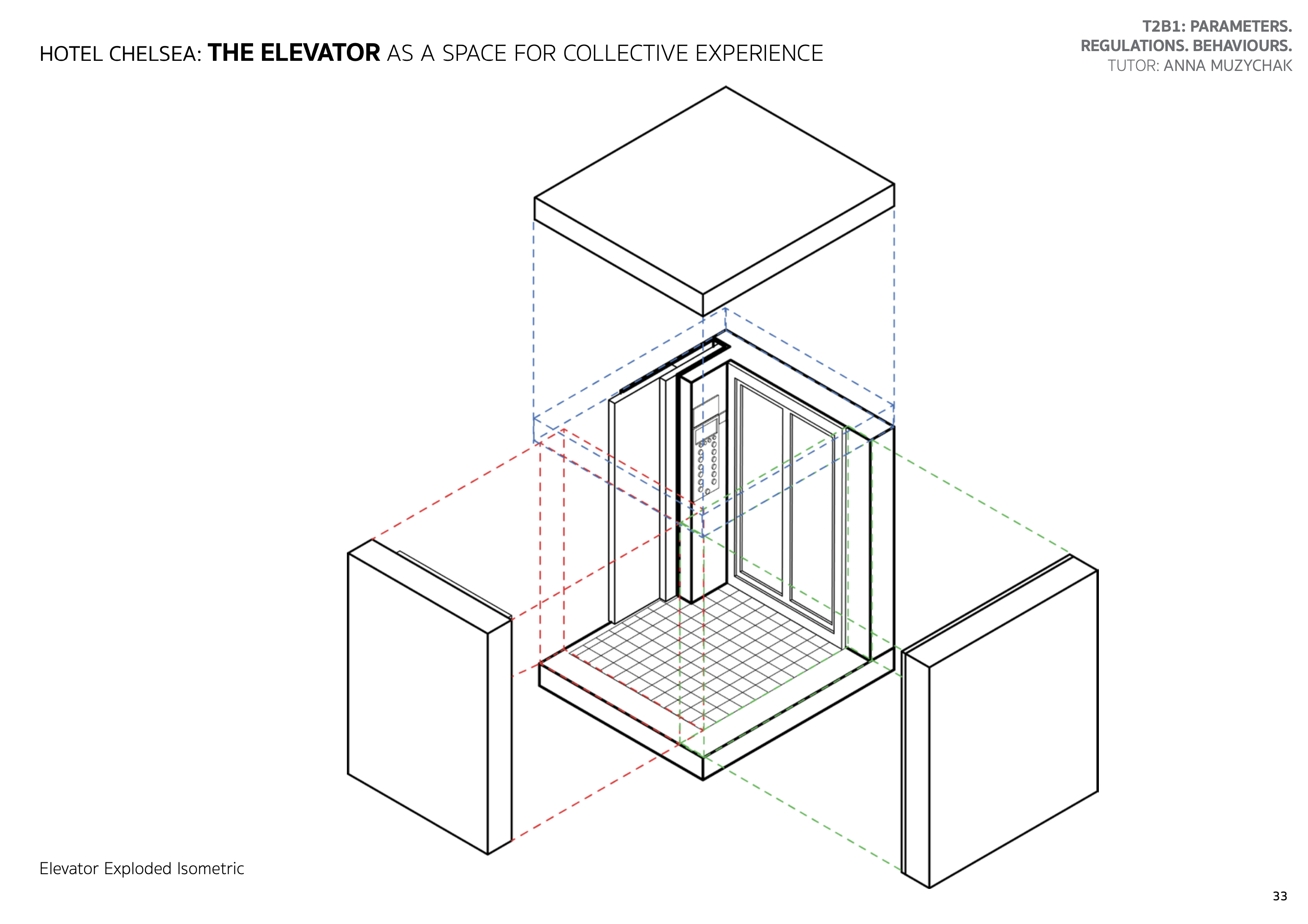
Using the research done for both case studies, I synthesised a Catalogue for Spaces of Collective Experience. I chose very specific settings from Hotel Chelsea.
For the fictional case study, I analysed phrases within the story’s time context to understand the gender-specificity of collective spaces.





Catalogue for Spaces of Intimacy
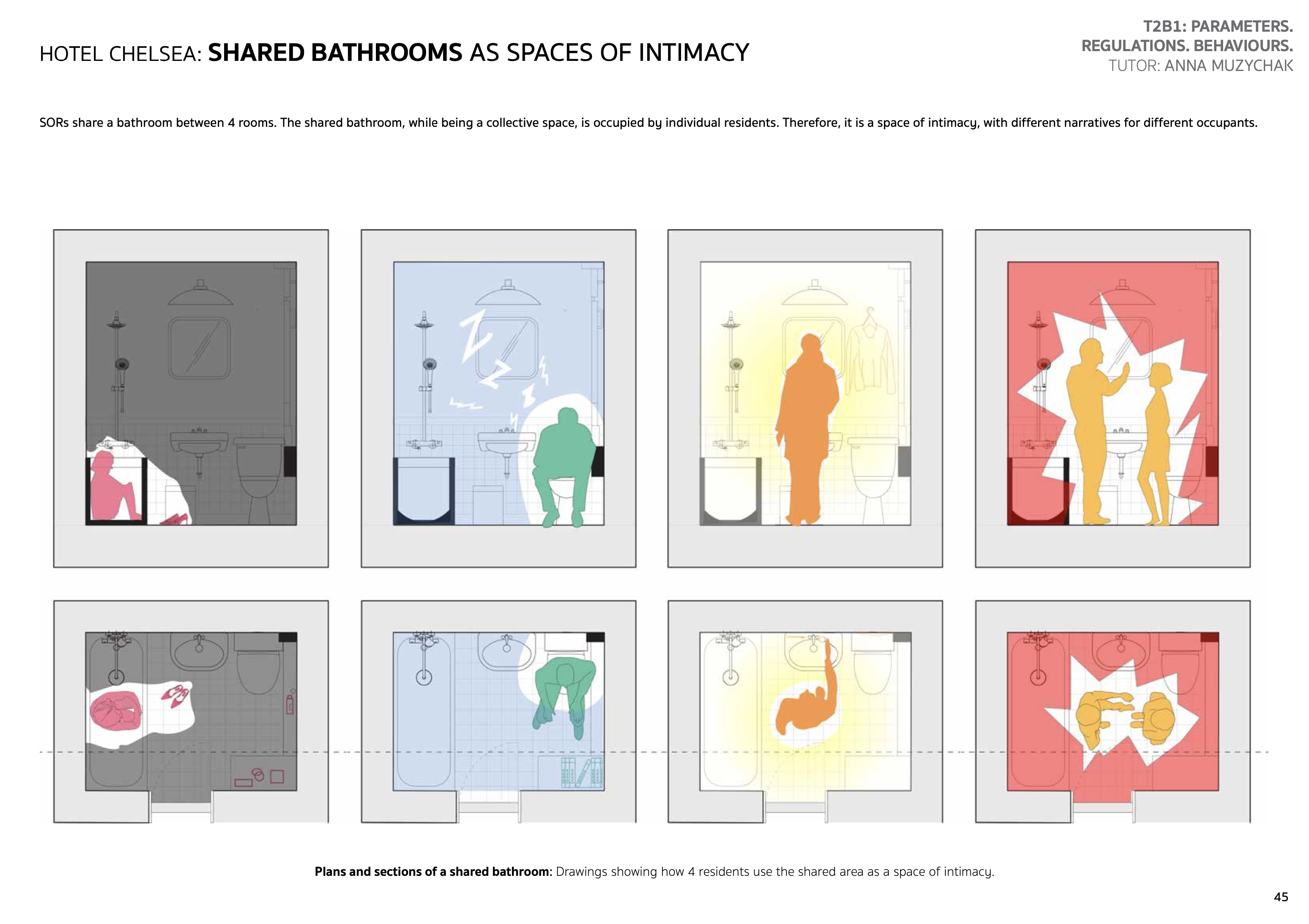
Using the research done for both case studies, I synthesised a Catalogue for Spaces of Intimacy. Similar to the previous catalogue, I chose very specific intimate settings from Hotel Chelsea.
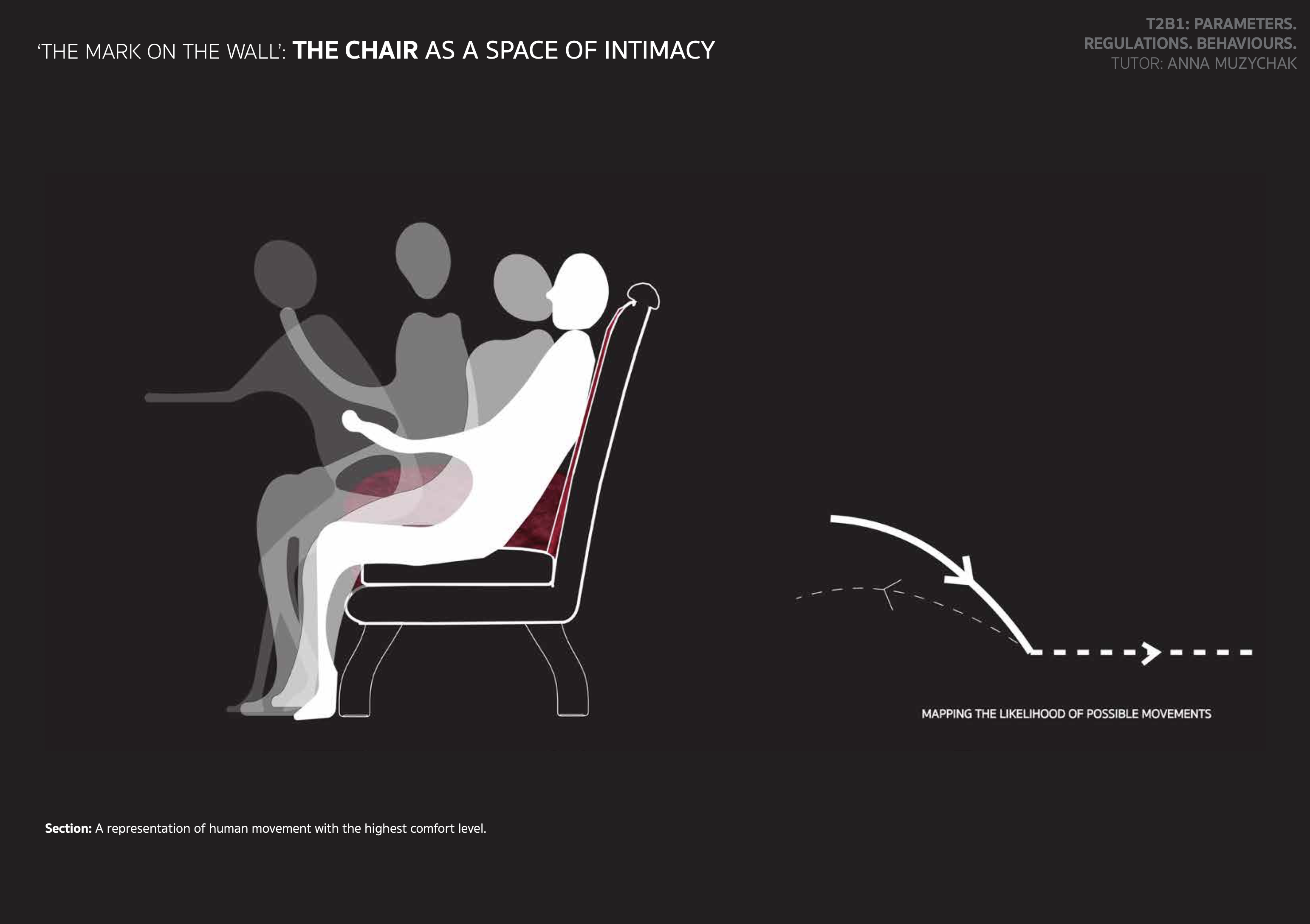
For the fictional case study, the narrator wrote the story from her chair. Consequently, I analysed the chair as a space of intimacy.





 Aaryaa Kamdar