
(Project in association with Gujarat Metropolitan Police)
EmpowerHer is a transformative project born out of a personal encounter with the challenges faced by young girls in rural India. The mission is to break barriers surrounding reproductive health awareness, using innovative data visualization techniques and culturally sensitive approaches to empower women in their journey towards greater body confidence and reproductive well-being. The data visualization uses simple geometric graphics to avoid feelings of shyness stemming from sensitive graphical representations of menstrual health.
Background Story: A Catalyst for Change
During a national-level soccer tournament, the stark contrast in backgrounds among my teammates revealed a harsh reality. In a quiet moment before the tournament, I encountered four girls from Patan, a village with minimal amenities but a powerhouse of soccer talent. One girl, experiencing her first menstrual cycle, was struggling to clean blood stains off her soccer jersey. It was a raw realization that many girls in rural India lacked basic awareness and resources for menstrual health. This realization became the catalyst for the EmpowerHer Initiative, seeking to dismantle the stigma surrounding female reproductive health in conservative rural communities. The initiative addresses this knowledge gap through discreet sex-ed classes, supported by data visualizations that offer accessible and anonymous information.
Research and Collaboration: Pioneering Change
Embarking on a journey of understanding, the initiative began with an in-depth exploration of the cultural intricacies and taboos linked to reproductive health in rural India. Collaboration with the Female department of the Gujarat Metropolitan Police broadened the scope, strategically reaching villages marked by a history of harassment, assault, and teenage pregnancies. This collaboration not only expanded outreach but also facilitated the deployment of an interactive data visualization tool on the Gujarat Metropolitan Police’s educational platform. With over 18,000 villages in the state, the need for addressing reproductive health awareness is immense. EmpowerHer aims to contribute to breaking the silence and bridging the knowledge gap in as many villages as possible, recognizing the scale of the challenge and the potential for transformative change.
Visualizing Empowerment: Navigating the Data Landscape
Embracing the potency of data visualization, the EmpowerHer Initiative crafted an interactive tool entirely in Gujarati. This tool serves as a conduit between information and empowerment. The visualization mainly focuses on providing information about menstrual hygiene and the menstrual cycle.
(Note: This webpage provides an expanded version of the visualization. The original interactive version was hosted on Gujarat Metropolitan Police’s education platform).
Section 1: Overview of Menstruation
Utilize simple geometric graphics to visually convey the transformative journey of girlhood through adolescence, emphasizing key physical changes, hormonal milestones, and societal expectations at each stage. Section 1 of the interactive visualization aims to provide a clear and engaging representation of the menstrual cycle and its association with individual growth. I used subtle, minimalist symbols for the pop-up to ensure that the girls don’t feel shy trying to interact with the graphic (Note: the original text is in Gujarati, as shown in image 3).

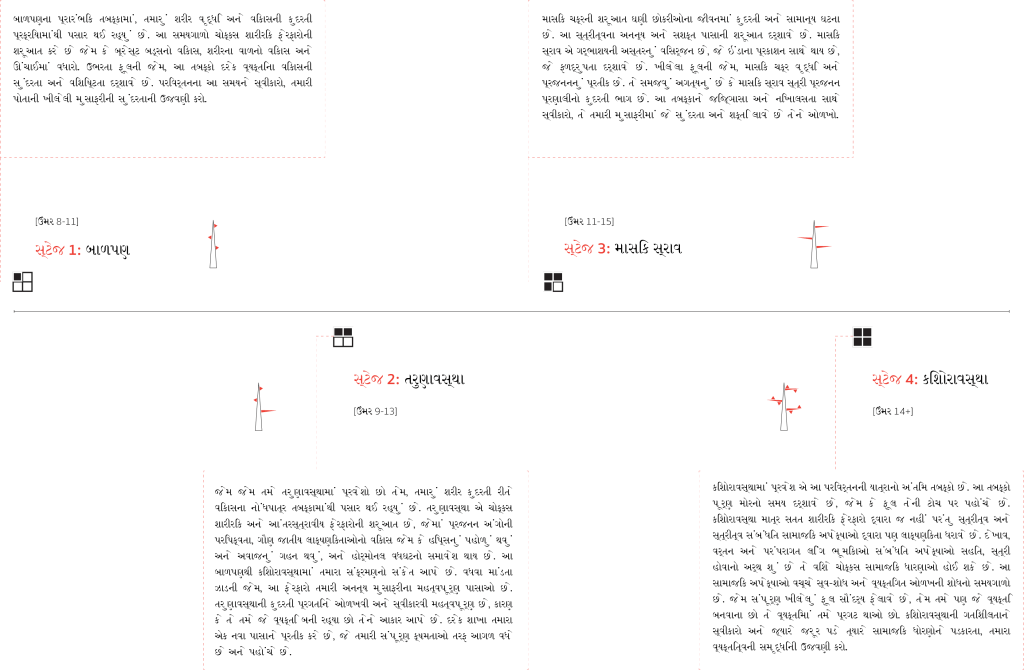


Looking at the graphic, it’s not visually clear that it targets menstrual health. This lack of direct communication helps overcome the shyness and therefore helps with the project’s goal of subtle education while respecting their societal beliefs.
Section 2: Symptoms of Menstruation
This section aims to provide a visual journey through the common symptoms of menstruation, fostering understanding and empathy while encouraging open conversations about these natural experiences. The expanded text also offers possible ways to calm extreme symptoms to avoid feelings of discomfort.


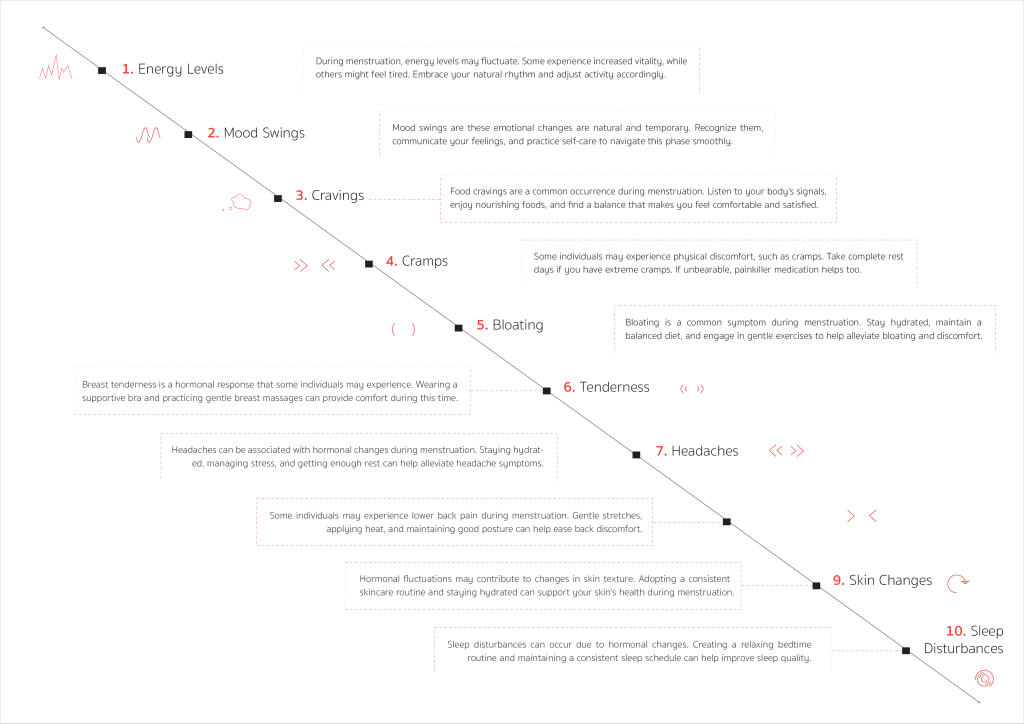

Noticing various symptoms can help girls seek targetted help, even specific to small tasks such as asking for a painkiller at the pharmacy or buying bras with better support weaving. Again, it was important to use graphics that weren’t too overt in communicating sensitive target body parts for some symptoms.
Section 3: Menstrual Cycle Phases
This section aims to demystify the menstrual cycle by visually presenting each phase. The use of simple graphics and clear explanations helps users understand the biological processes occurring during different days of their cycle. Each phase is highlighted with a graphic of the female reproductive system to help associate the description with each phase of the menstrual cycle.

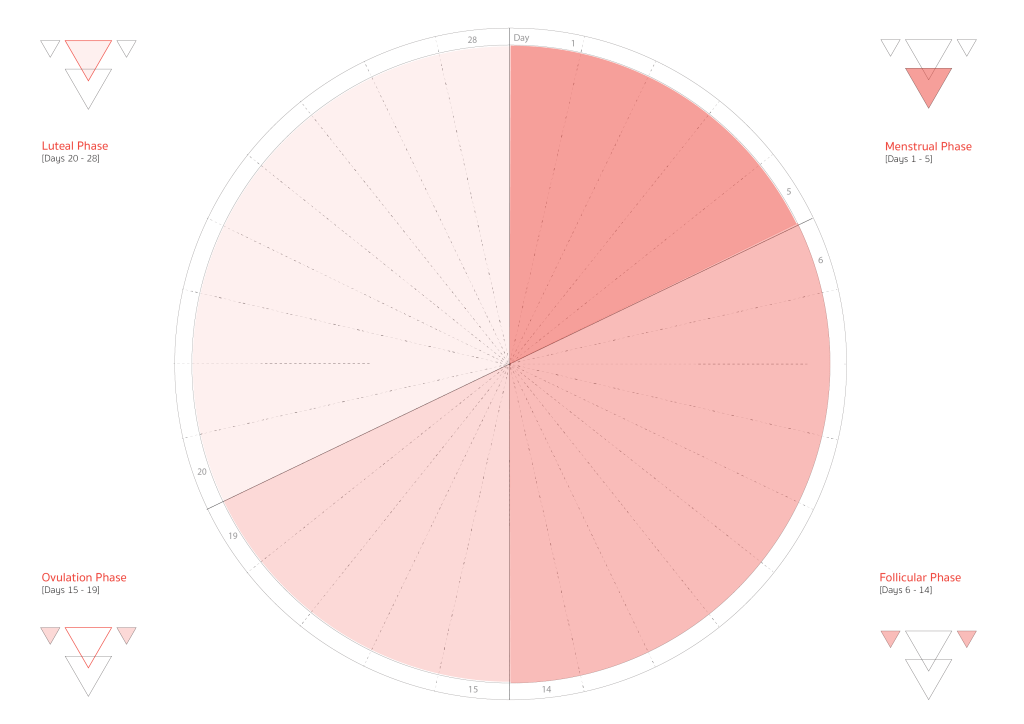

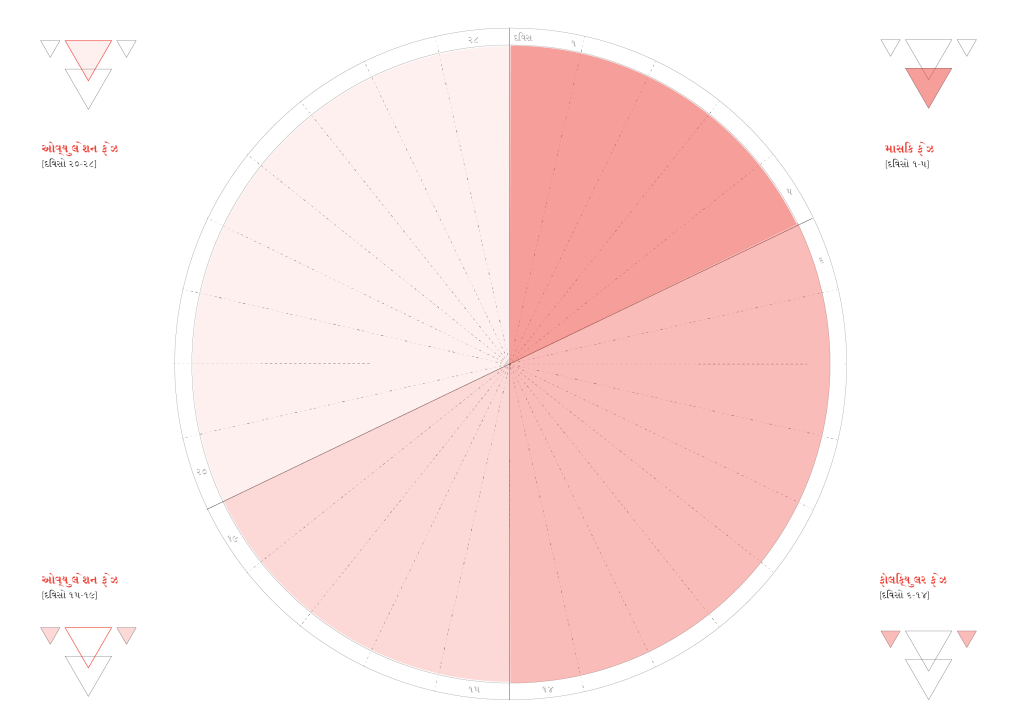
Having a section dedicated to phases of the cycle promotes a sense of normalcy and helps differentiate between regular and irregular menstrual cycles, potentially facilitating early detection of possible health issues. Additionally, the knowledge of menstrual phases becomes a powerful tool for challenging taboos and dispelling myths deeply rooted in the community. A lot of rural Gujarati communities are religious practitioners and are often subjected to cultural practices associating menstruation with impurity and restrictions. For example, a girl on her period might be prohibited from performing prayer rituals for the 5 days of the menstruation phase. By providing accurate information and encouraging open discussions about menstrual phases, Section 3 plays a crucial role in empowering girls to navigate cultural norms effectively, facilitating a positive shift in attitudes towards menstruation within their community.
Note:
- The day references are approximate and can vary from person to person.
- A standard 28-day cycle is just an example and menstrual cycle lengths can vary, with 28 days being a common average.
Section 4: Menstrual Hygiene Products and Options
Section 4 of the visuals helps users discover the benefits and considerations of different menstrual hygiene products. Whether they prefer the ease of pads, the convenience of tampons, or the eco-friendly nature of menstrual cups, the visual outlines pros cons and logistic considerations for each product.


Note:
- The availability index is subjective and may vary based on specific regions within rural Gujarat.
- Users are encouraged to consider personal preferences, comfort, and environmental values when choosing menstrual hygiene products.
- The information provided is a general guide and may be subject to changes based on local factors and availability.
Section 5: ‘You’re not alone!’
Embarking on a journey of menstrual health can be both exciting and daunting, especially when faced with the unknown. In this section, we invite you to explore the unique and personal stories of individuals who have graciously shared their diverse menstrual experiences. These narratives shed light on the intricacies of each journey, from irregular beginnings to symptom precursors and everything in between.
We understand that discussing menstrual health can be sensitive, and questions may linger in the back of your mind. Here, the stories act as companions, offering a comforting space to explore without having to vocalize your thoughts. Listening to others’ experiences has a magical way of calming nerves and answering questions that may be difficult to articulate. It’s a journey of shared stories, each one contributing to a broader conversation about the beauty and diversity of menstrual health.
So, take a moment to immerse yourself in these narratives. Whether you’re seeking reassurance or answers, or simply curious about the myriad ways our bodies navigate this journey, these stories are here to provide understanding, foster empathy, and celebrate the richness of each individual’s menstrual health experience.
Story 1: Irregular Beginnings
Hi, I’m Priya. My period made its debut when I was 14, and let me tell you, it wasn’t the predictable monthly visitor they talked about. My cycles danced to their own rhythm—sometimes 30 days, sometimes 40. It left me feeling a bit lost. That’s when I decided to dive into understanding my body. Discovering the why behind the irregularities was like finding missing pieces of a puzzle. Now, at 18, I embrace the uniqueness of my cycle, and the irregularities don’t feel like hurdles anymore. They’re just a part of what makes me, well, me.
Story 2: Symptom Precursors
Hello, I’m Aisha. My period came knocking when I was 12, and over the years, I noticed a fascinating pattern. A week before my period, my body gives me signals—tender breasts, a slight mood shift, and this burst of energy. These symptom precursors act like my body’s way of saying, “Get ready, it’s almost showtime!” Understanding these cues has become a superpower. Now, at 25, I navigate my menstrual health with a proactive stance, making the entire experience a well-choreographed dance.
Story 3: The Early Indicators
Hi there, I’m Neha. My period made its grand entrance when I was 13, and a set of early indicators came with it. A day or two before, I noticed a gentle ache and a subtle shift in my mood. It’s like my body’s way of giving me a heads-up. Understanding these signs has transformed my menstrual journey. Now, at 17, I’ve turned this awareness into a self-care routine, making the anticipation of my menstrual health needs a part of my overall well-being.
Story 4: A Rollercoaster of Symptoms
Greetings, I’m Ritu. My period arrived fashionably late at 15, and ever since, it’s been a bit of a rollercoaster. Some months, I sail through with minimal symptoms and other times, it’s like my body decided to throw a party. From intense cramps to mood swings, it’s a diverse experience. Rather than seeing it as a challenge, I’ve embraced a holistic approach. Now, at 20, managing both my physical and emotional well-being has become a dance, and I celebrate the uniqueness of each cycle.
Story 5: Celebrating Diversity
Hey, I’m Maya. My period joined the party when I was 12, and since then, it’s celebrated diversity. I’ve noticed that my body doesn’t follow a strict script each month. Some cycles are like clockwork, while others are a bit more spontaneous. From a surprise burst of energy to a day of cozy self-care, each cycle has its own story to tell. Now, at 23, I celebrate these differences, appreciating the unique journey each of us has in the tapestry of menstrual health.
Community Outreach: Nurturing Conversations
Collaborations with local authorities, healthcare professionals, educators, and community leaders played a pivotal role in amplifying the impact of the EmpowerHer Initiative. I visited 16 villages in rural Gujarat (Image 5) to spread awareness about EmpowerHer. Initiating sex-ed classes in rural villages involved a strategic approach that began with engaging local authorities and securing permission to conduct sessions. Recognizing the potential impact of targeting girls’ soccer teams, I conducted interactive sessions using these visualizations as icebreakers, subtly introducing discussions on menstrual health in a non-intimidating manner. The visualizations acted as educational tools, allowing girls to explore information at their own pace and fostering a sense of autonomy. To address the sensitivity of the topic, clandestine sex-ed classes were implemented in schools, providing a confidential space for open discussions. Cultural sensitivity workshops ensured the visualizations aligned with community values, and facilitators were trained to lead nuanced discussions. Encouraging questions and incorporating real-life scenarios, the visualizations prompted interactive discussions, contributing to a healthier understanding of reproductive health. Continuous feedback collection allowed for iterative improvements, ensuring the content remained relevant and impactful. The long-term goal was community empowerment, challenging taboos, and fostering an environment where reproductive health conversations could thrive with the support of local leaders and educators.

Conclusion
Therefore, the initiative successfully intertwines data and cultural sensitivity to initiate social awareness about menstrual health in rural Gujarat. EmpowerHer, rooted in a profound encounter during a national soccer tournament, emerges as a catalyst for change in addressing the pervasive social taboo around female reproductive health in rural India. In the face of this deeply ingrained cultural hesitancy, particularly among girls, to discuss menstruation openly, EmpowerHer utilizes innovative data visualization techniques to breach the barriers of shyness while respecting cultural sensitivity. By providing accessible and anonymous information, the visualizations become a powerful tool, fostering a sense of empowerment and encouraging informed discussions. EmpowerHer envisions a future where the transformative impact of knowledge eclipses societal taboos, creating a space where every girl feels empowered to embrace her reproductive well-being with confidence and awareness.
 Aaryaa Kamdar